


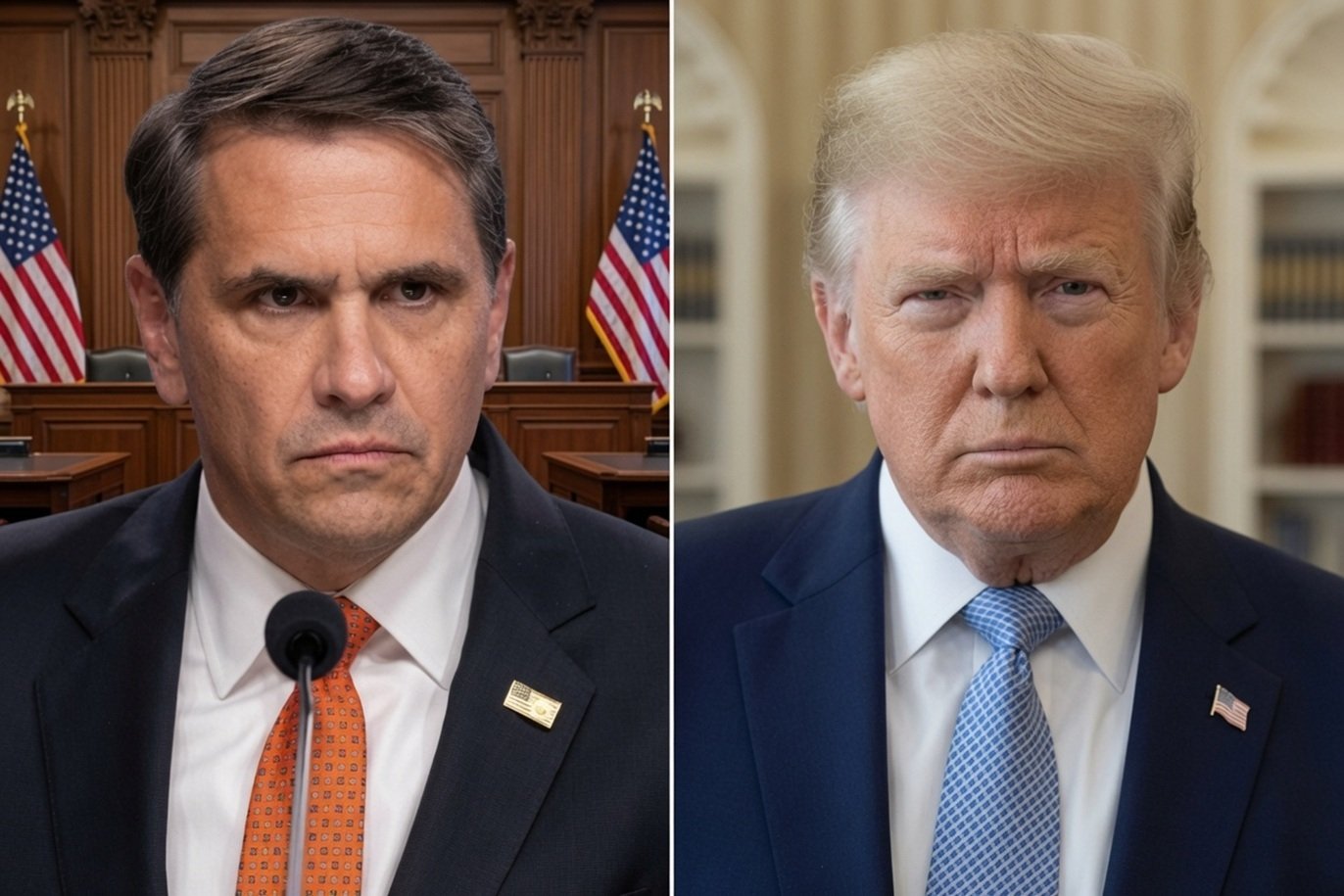

Blanche’s Attorney General Bid Under Fire After NYC Bar Association Declares Him ‘Unfit’
Share your love
 –Editorial
WASHINGTON, D.C. — President Donald Trump’s nomination of Acting Attorney General Todd Blanche to permanently lead the U.S. Department of Justice is facing mounting opposition after the New York City Bar Association formally urged the U.S. Senate to reject his confirmation, arguing that his record demonstrates he is “unfit” to serve as the nation’s chief law enforcement officer. The recommendation, submitted July 13 to the Senate Judiciary Committee ahead of Blanche’s confirmation hearings, comes as lawmakers weigh whether to advance his nomination to the full Senate.
In a letter addressed to Senate Judiciary Committee Chairman Chuck Grassley, R-Iowa, and Ranking Member Dick Durbin, D-Ill., the Bar Association said Blanche has repeatedly placed political loyalty above the constitutional independence expected of the Department of Justice. The organization contends his actions as Deputy Attorney General and Acting Attorney General raise serious concerns about his ability to enforce federal law impartially and preserve public confidence in the justice system.
The opposition represents one of the most significant challenges yet to Blanche’s nomination, which has drawn national attention because of his close ties to President Trump. Before joining the Justice Department, Blanche served as Trump’s personal defense attorney in several high-profile criminal cases. He assumed the role of Acting Attorney General after the dismissal of former Attorney General Pam Bondi and now requires Senate confirmation to remain in the position permanently.
The New York City Bar Association, one of the country’s oldest and most influential legal organizations, said its recommendation is based on what it describes as a pattern of politically motivated decisions, constitutional concerns, ethical questions and actions that it believes weakened the Department of Justice’s independence. The group argued that the Attorney General must be guided by the Constitution and the rule of law rather than allegiance to any president or political party.
Blanche has rejected suggestions that he would act as a political loyalist, telling senators during his confirmation hearing that he is “not a yes man” and would resign rather than carry out an unlawful directive from the president. He defended his record, saying his decisions have been based on legal principles and that he intends to restore public trust in the Justice Department.
During one exchange that quickly drew national attention, Blanche appeared to momentarily misspeak when responding to questions about his relationship with President Trump. Asked about his role, he began by saying, “I’m President Trump’s personal attorney,” before immediately correcting himself: “I was President Trump’s personal attorney. I’m the deputy attorney general.” The brief exchange underscored one of the central issues raised throughout the confirmation process—whether Blanche can fully separate his previous role as Trump’s private defense attorney from his responsibilities as the nation’s top law enforcement official. Democratic senators repeatedly returned to that question during the hearing, while Blanche maintained that he would uphold the Constitution and enforce the law independently, regardless of politics.
Nevertheless, his nomination has become one of the most closely watched confirmation battles of Trump’s second administration. Democratic senators have questioned Blanche about his previous representation of Trump, his handling of matters related to Jeffrey Epstein, and other controversial Justice Department decisions. Some Republican lawmakers have also raised concerns over specific actions taken during his tenure, making the confirmation process more closely scrutinized than initially anticipated.
Senate Timeline
Blanche’s nomination first must be approved by the Senate Judiciary Committee before advancing to the full Senate, where confirmation requires only a simple majority. Although the Constitution sets no deadline for Cabinet confirmations, they typically take several weeks, depending on committee deliberations, floor scheduling and political negotiations. Republican leaders have indicated they hope to complete the process before the Senate’s August recess, though the timeline could change if procedural delays arise.
Despite the criticism from legal organizations, former Justice Department officials and ethics advocates, political analysts note that Blanche remains on a relatively favorable path to confirmation because Republicans hold the Senate majority. Unless multiple Republican senators break with their party, observers expect his nomination to ultimately receive enough votes for confirmation.
Whatever the outcome, the debate surrounding Blanche’s nomination has become a broader referendum on the future independence of the Department of Justice and the relationship between the nation’s chief law enforcement agency and the White House. The Senate’s decision is expected to have lasting implications for how future administrations balance presidential authority with the traditional autonomy of federal prosecutors.