


IVC Automotive Complex Marks New Era for Career Education in Imperial Valley
Share your love
 -Editorial
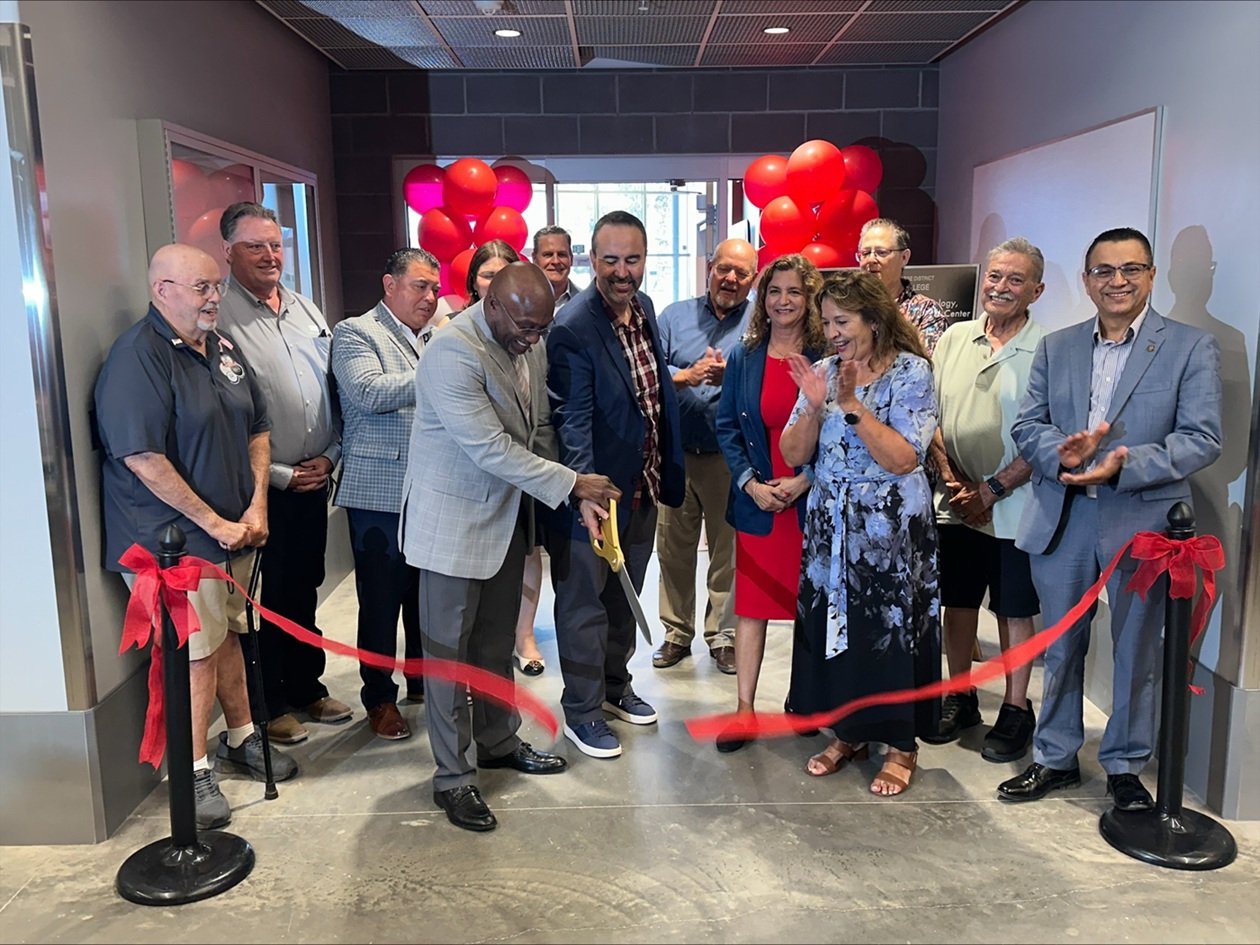
Imperial Valley College celebrated the completion of its new Automotive Technology Complex with a soft opening and ribbon-cutting ceremony July 15, marking the final major construction project funded through the college’s voter-approved 2010 Measure J bond program.
The 30,000-square-foot facility, located on the northwest side of the IVC campus, reached substantial completion in May 2026 and is scheduled to welcome students when fall 2026 classes begin Aug. 17. Minor finishing work and site improvements will continue following the ceremony.
The $42.5 million complex is designed to expand workforce education opportunities and prepare students for careers in automotive and diesel technology, industries that continue to experience demand for skilled technicians throughout Imperial County and the region.
Imperial Valley College President/Superintendent Dr. Lennor Johnson said the project represents more than two decades of planning and investment in the college’s workforce training programs.
“This has been a project 20 years in the making,” Johnson said. “It has been a priority for the district, and I’m just happy that we’re here now, especially with everything that’s going on with new technology, electric vehicles and electric diesel trucks. It’s so important right now to have these facilities upgraded to a point where we can really be ready not only for now, but for the next 20 to 30 years.”
Johnson said the facility will provide students with access to modern training opportunities and pathways to employment.
“A lot of students do not know what these hidden opportunities are, and this is a way that we can showcase that those opportunities are here,” Johnson said. “These are short-term programs. You can complete your certificate or associate degree in a year to two years and become gainfully employed relatively quickly.
IVC Board President Erik Ortega said the complex represents an investment in creating additional educational and career opportunities for local students.
Ortega said the project took years of planning and will allow the college to provide improved facilities for students pursuing automotive and diesel careers.
“Years of progress have brought us to this point where everything is developed,” Ortega said. “Now we can offer more options to our community and our students. Previously, there was a place to teach this type of mechanics, but unfortunately the conditions were not the best. That is when the focus shifted toward this project.”
Ortega said the college’s goal is to continue developing programs that allow students to complete their education locally while preparing for employment opportunities in the region.
“That is always the goal, and that is why we continue developing programs like automotive technology and public safety, so students can complete their studies here and have opportunities to work here,” Ortega said.
The new facility increases instructional capacity for the Automotive Technology Program from approximately 22 students per class to as many as 35 students, allowing the college to serve more students pursuing technical careers.
The program uses an accelerated training model that allows students to complete coursework in a shorter timeframe before becoming eligible to take nationally recognized Automotive Service Excellence (ASE) certification exams.
IVC Vice President of Administrative Services Cesar Vega said the project represents a significant investment in the future workforce of the Imperial Valley.
The facility was funded through Measure J, a bond approved by voters in 2010, along with the Imperial Valley College Building Fund.
“This project was funded and paid for through Measure J, which was approved in 2010,” Vega said. “Many years passed, but we are here now and this project has become a reality. It is the first Auto Tech Center in the Imperial Valley, and it not only represents the Imperial Valley, but it represents the entire state of California.”
Vega said the complex provides students with advanced technology and equipment designed to support hands-on learning.
“When it comes to technology and equipment, it is the best of the best, and everything is for the students of the Imperial Valley because they truly deserve this,” Vega said.
He said completing a project of this size required experience, planning and collaboration.
“It is $42 million project well invested,” Vega said. “This belongs to them, for current generations and for the generations to come.”
The complex includes automotive service bays, a diesel shop, a machine room, modern classrooms, automotive laboratories, art and photography spaces, indoor and outdoor instructional areas, a tool room, and a traditional photography darkroom.
The facility also includes a maker room equipped with 3D printers and other emerging technologies designed to support engineering and industrial technology students through hands-on innovation and applied learning.
The college’s Career Services Center will also be housed in the new building, creating additional connections between academic programs, internships and employment opportunities.
The complex incorporates sustainability features, including a photovoltaic solar structure, battery energy storage system and electric vehicle charging stations.
IVC also partners with Ford Motor Company through its Automotive Continuing Education program, providing students with opportunities to earn Ford certifications and receive manufacturer-specific training.
Construction began in November 2024. The project was designed by Sanders Inc., an El Centro-based architecture and engineering firm, and built by Erickson-Hall Construction.
The project was delayed for more than a decade after the Great Recession reduced Imperial County property values and postponed bond sales needed to complete the originally planned facility.
To accommodate construction, the former diesel laboratory and Art and Humanities Building were demolished. The existing Automotive Technology classroom building and tool building remained operational while the new complex was built.
The Automotive Technology Complex represents the final major construction project under Measure J, which also funded the 47,000-square-foot Career Technical Education Complex that opened in 2014.