



Toyota’s Tacoma Departure from Baja California Signals Major Shift in North American Auto Manufacturing
Share your love
 -Editorial
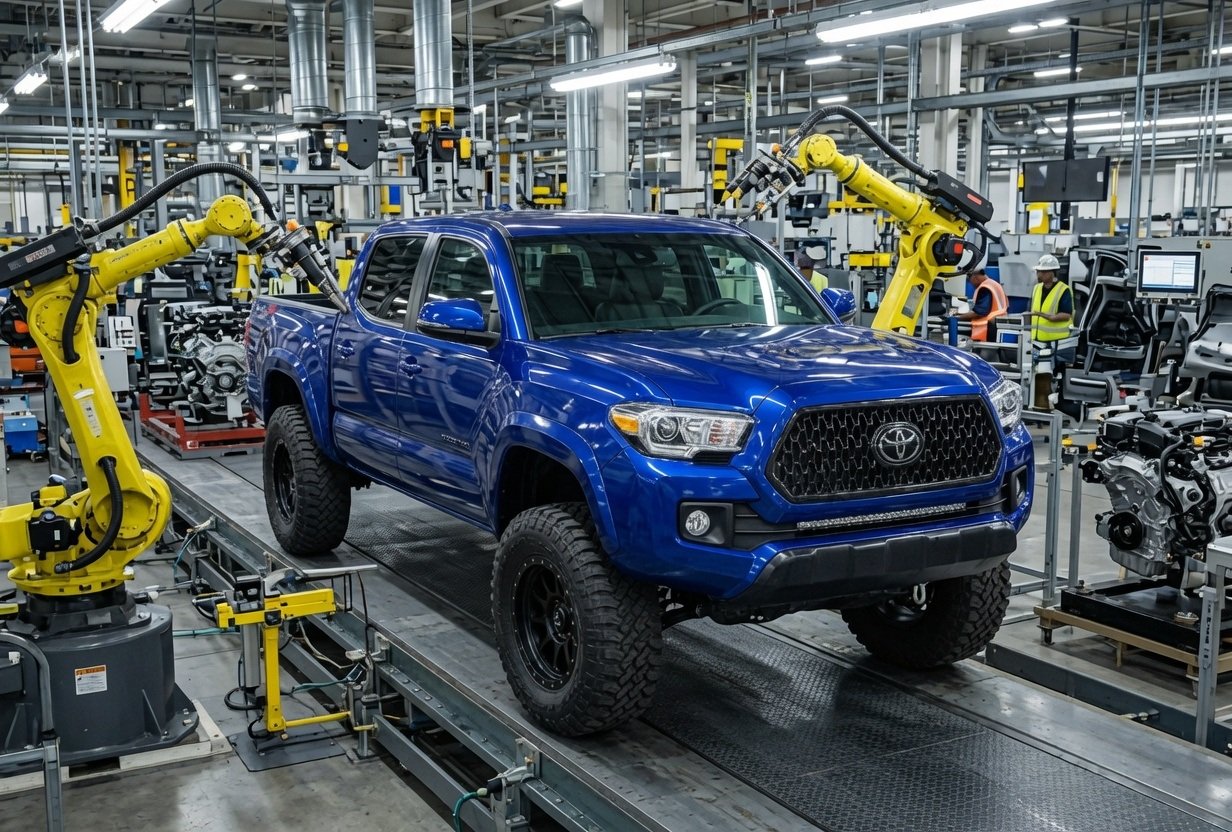
Toyota confirmed a significant shift in its North American manufacturing strategy after announcing that Tacoma pickup production will gradually move from its Tijuana plant to a new assembly line in San Antonio, Texas, scheduled to begin operations in 2030.
The announcement was publicly confirmed this Tuesday by Baja California Governor Marina del Pilar Ávila Olmeda, who stated that the Japanese automaker will stop manufacturing the Tacoma in the state once the transition process is completed. The governor explained that the decision had already been communicated to the state government and emphasized that the change will take place gradually over the coming years, allowing the plant to continue operating while the production transfer is implemented.
The move is part of a $3.6 billion investment by Toyota Motor North America to expand its San Antonio, Texas, manufacturing complex. The project includes the construction of a second assembly line, expansion of the industrial campus, and the creation of approximately 2,000 new jobs, strengthening Toyota’s production capacity for one of the brand’s most successful vehicles in the North American market.
The decision represents one of the most significant industrial developments for the border region in recent years. Since beginning operations in 2002, Toyota’s Tijuana plant has become one of North America’s main Tacoma production centers, serving as an important generator of direct and indirect employment and a strategic component of Baja California’s automotive supply chain.
However, Toyota has made clear that the transition does not represent an exit from Mexico. The company confirmed that Tacoma production will continue at its Guanajuato facility, which will remain a key location for supplying the regional market.
The restructuring is part of a long-term strategy aimed at strengthening production capacity in the United States and increasing manufacturing capabilities to meet growing demand for pickup trucks. At the same time, the investment seeks to optimize manufacturing logistics and reinforce Toyota’s presence in one of its most important markets.
The announcement comes at a time of major changes across the North American automotive industry. The review of the United States-Mexico-Canada Agreement (USMCA), initiated this year according to the terms established in the trade agreement, has prompted manufacturers and suppliers to analyze future investment decisions and production locations throughout the region. In addition, industrial policies promoted by the United States government have encouraged greater domestic manufacturing in strategic sectors.
Industry experts consider that automakers continue adjusting their strategies to balance production costs, logistics, supplier availability, and trade conditions—factors that have gained greater importance in recent years.
For Baja California, the announcement represents a significant challenge due to the importance of the automotive industry within the state’s economy. However, the planned transition timeline provides several years for government officials, business organizations, and the company itself to determine the future of the Tijuana facility and explore new investment opportunities to maintain the region’s competitiveness.
So far, Toyota has not announced what project will replace Tacoma production at the Baja California plant once the transition is completed. The company has also not disclosed whether the facility will be used to manufacture another vehicle model, automotive components, or future production platforms.
Despite the Tacoma relocation, Mexico remains a strategic market for Toyota in North America. The company continues to operate manufacturing facilities in the country, maintain an extensive supplier network, and strengthen its commercial presence, making Mexico one of the continent’s most important automotive production hubs.
With the transition scheduled to be completed in 2030, the move marks a new phase in Toyota’s regional strategy and reflects the transformation underway in the automotive industry as companies adapt to an increasingly dynamic and competitive commercial environment.