


The USMCA Begins Its Review Process After Completing Six Years in Force
Share your love
 By: Dr. Alejandro Díaz-Bautista, Economist and Researcher (Ph.D.)
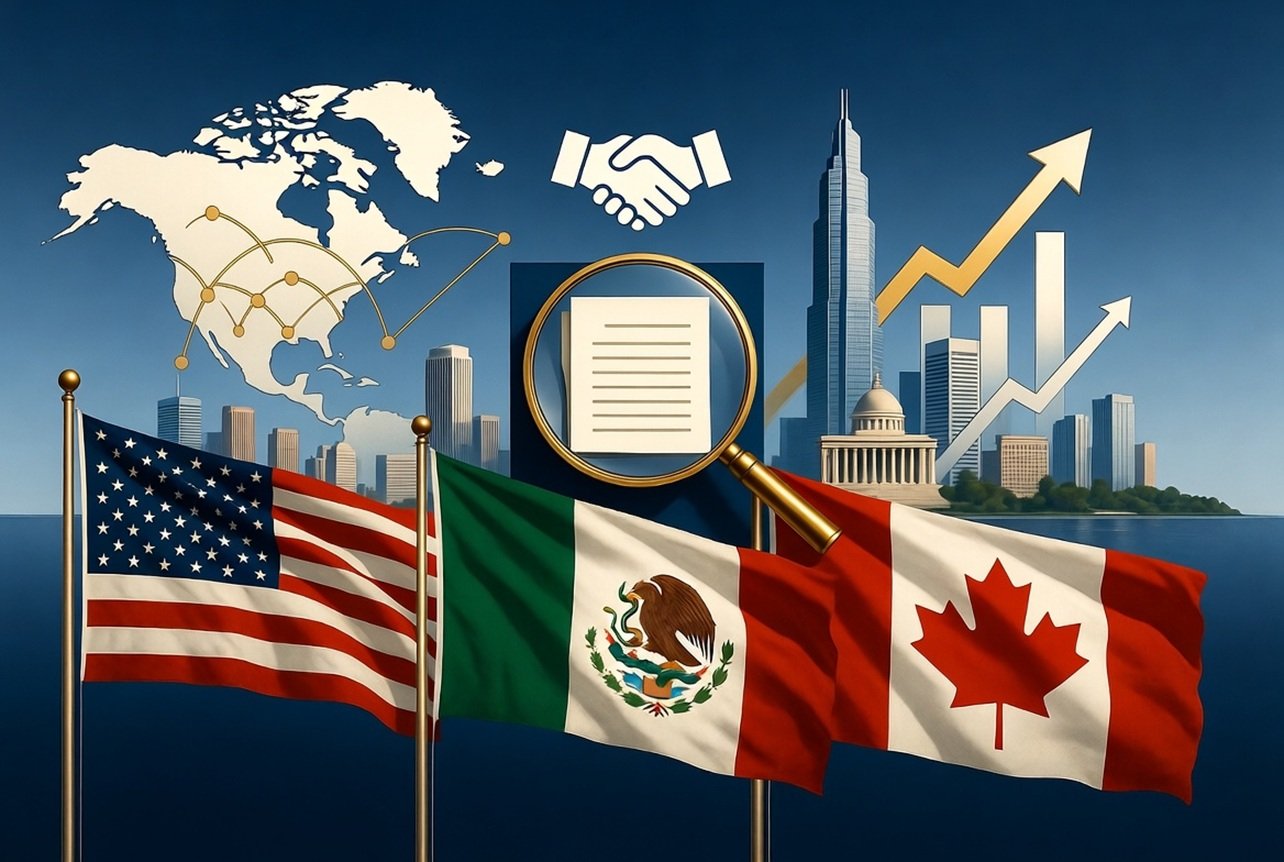
Last July 1 marked an institutional milestone for the United States–Mexico–Canada Agreement (USMCA) as it reached the sixth anniversary of its entry into force and officially triggered the treaty’s scheduled review mechanism. On that date, each country was required to submit an official letter, signed by its Head of State or Government, expressing its national preferences regarding the future of the agreement.
The treaty establishes two possible paths. The first is to extend its duration for an additional 16 years, which would initiate a broader and more structured review process. The second is to adopt a 10-year renewal framework, subject to annual reviews over the course of a decade. This institutional design seeks to balance the stability of the trade framework with the flexibility needed to adapt to the technological, industrial, and regulatory changes affecting North America.
In this context, the position of the United States has taken on particular significance. According to repeated statements by Jamieson Greer, head of the Office of the United States Trade Representative (USTR), Washington does not favor an automatic extension of the agreement’s term. This position introduces a technical, economic, and political challenge in defining the scope, criteria, and procedures for the annual reviews, particularly in strategic sectors such as advanced manufacturing, energy, the automotive industry, semiconductors, and critical supply chains.
The nature of these processes—including updating rules of origin, verifying regional content, and requiring that steel be produced entirely within North America—involves implementation timelines that typically extend over several years. As a result, the discussion surrounding the review mechanism is not merely procedural; it has direct implications for industrial planning, foreign direct investment, and regulatory coordination among the three countries.
From an economic perspective, the debate over the future of the USMCA is taking place at a time of profound transformation in global value chains, driven by digitalization, automation, and the growing importance of artificial intelligence in production processes. Legal certainty and regulatory stability remain decisive factors for companies when developing long-term investment strategies.
 In this regard, the decision made on July 1 not only defines the agreement’s future timeline but will also influence North America’s ability to strengthen its position as a competitive economic bloc in relation to other regions. Clarity in the review mechanisms will be essential to prevent uncertainty from affecting industrial reshoring, energy integration, the transition toward cleaner manufacturing, and the development of trilateral technology ecosystems. Likewise, a predictable regulatory framework will facilitate progress on emerging issues such as algorithm regulation, industrial data protection, and the harmonization of standards for advanced technologies.
Finally, regardless of the positions presented by each country on July 1, the USMCA remains in force and fully operational. Nevertheless, the date marks the beginning of an institutional dialogue that will be critical to the region’s economic future. Mexico and the United States have already scheduled an additional trade meeting for July 20 in Mexico City, reflecting the importance of maintaining open channels of communication and high-level negotiations.
About Dr. Alejandro Díaz-Bautista
Professor and Researcher in International Economics at El Colegio de la Frontera Norte (El Colef). Distinguished member of Mexico’s National System of Researchers (SNII). He has also served as a professor at Universidad Iberoamericana and CISE, as well as a Fellow and Guest Scholar at UC San Diego, and a Visiting Professor at UC Irvine.