


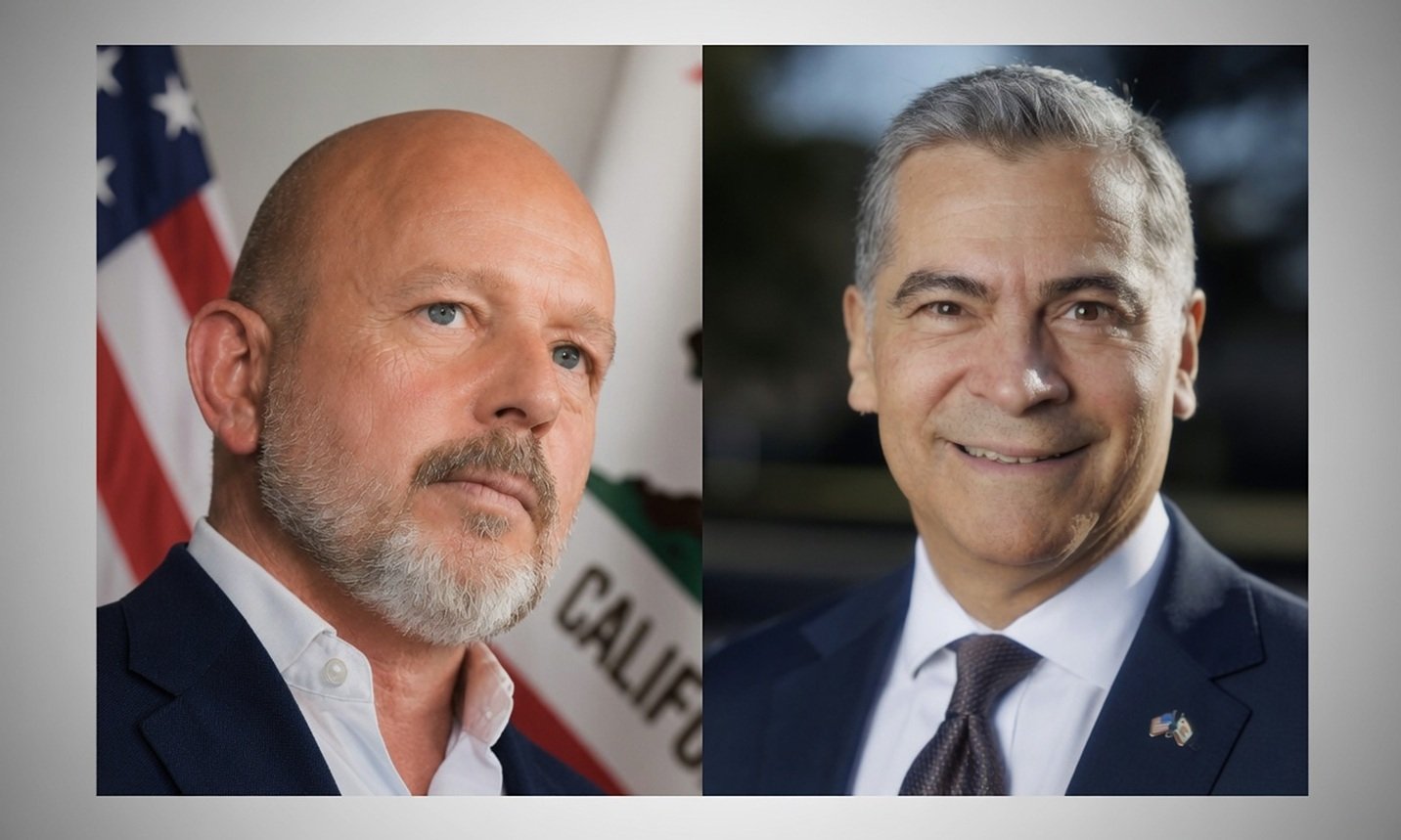

Becerra and Hilton Contrast Policies in Governor’s Race
Share your love
 -Editorial
As California’s gubernatorial campaign moves toward the November election, Democratic candidate Xavier Becerra and Republican candidate Steve Hilton are presenting voters with sharply different visions for addressing some of the state’s most pressing issues, including immigration, health care, housing affordability and economic opportunity.
The differences were highlighted during separate candidate forums hosted by American Community Media and moderated by associate editor Pilar Marrero. Both candidates fielded questions from ethnic and community media outlets across California, outlining how they would govern the nation’s most populous state if elected.
While both candidates identified affordability as a major concern for Californians, they proposed significantly different solutions and offered contrasting views on the role of government in addressing the state’s challenges.
Becerra, a former U.S. Secretary of Health and Human Services under President Joe Biden and former California attorney general, framed his campaign around expanding opportunity for working families, increasing access to health care and protecting immigrant communities.
Hilton, a businessman, media commentator, and former political adviser who immigrated to the United States from the United Kingdom, argued that California needs a new direction after years of Democratic leadership. He emphasized reducing taxes, lowering energy costs, increasing economic competitiveness, and strengthening cooperation with federal authorities on immigration enforcement.
Immigration emerged as one of the clearest areas of contrast between the two candidates.
Becerra said California should continue using legal challenges and existing state laws to protect immigrant communities when federal actions are believed to violate constitutional rights. Drawing from his experience as attorney general during President Donald Trump’s first administration, Becerra said he would use similar legal tools as governor if federal immigration enforcement actions exceed constitutional limits.
He argued that federal agencies, including Immigration and Customs Enforcement, must operate within the boundaries of the Constitution and respect state laws when acting beyond their jurisdiction.
Becerra also connected the issue to his personal background, noting that he is the son of immigrants and understands concerns many immigrant families face regarding enforcement actions and legal protections.
Throughout the forum, Becerra emphasized that immigrant communities are an important part of California’s social and economic fabric and said the state should continue defending their rights under existing law.
Hilton, however, argued that immigration enforcement is primarily the responsibility of the federal government and that California officials should not obstruct federal immigration policies.
Describing himself as the son of Hungarian refugees and a legal immigrant who later became a U.S. citizen, Hilton said he supports legal immigration but believes state leaders should cooperate with federal authorities rather than engage in legal battles against them.
He argued that California’s current approach has created unnecessary conflict between state and federal governments and said a Hilton administration would seek a more collaborative relationship with federal agencies.
Hilton also rejected suggestions that stricter immigration enforcement is inherently anti-immigrant, saying the issue is about enforcing existing laws while maintaining legal pathways for immigration.
The candidates also differed on the role immigration plays in California’s labor force.
When asked about concerns that stricter immigration enforcement could affect California agriculture, Hilton argued that the state’s economy has become too dependent on undocumented labor. He said California should focus on increasing workforce participation among unemployed residents and expanding technological innovation, including automation in agriculture.
Becerra, meanwhile, focused on protecting immigrant workers and families and ensuring that enforcement actions comply with constitutional safeguards.
Health care represented another major policy divide.
Becerra highlighted his long involvement in health care policy at both the state and federal levels. He pointed to his work helping draft and pass the Affordable Care Act, defending it in court as California attorney general, and overseeing its implementation as Secretary of Health and Human Services.
He also cited efforts to lower prescription drug costs, including federal negotiations aimed at reducing Medicare drug prices and policies that capped insulin costs for many patients.
Addressing criticism from some political opponents, Becerra said he continues to support efforts toward universal health coverage and rejected claims that he has moved away from supporting a single-payer system.
He noted that he co-sponsored Medicare for All legislation in Congress and said his objective has consistently been expanding access to health care while reducing costs and inefficiencies within the system.
Becerra argued that removing administrative barriers and reducing the influence of intermediaries could help make health care more affordable for Californians.
Hilton took a different approach, focusing on the financial sustainability of California’s health care programs.
He criticized state-funded health coverage for undocumented immigrants and questioned whether taxpayers should bear the cost of providing publicly funded health care benefits to noncitizens.
Hilton also argued that hospitals across California face increasing financial pressures and that population growth has added strain to public services, including hospitals and schools.
He said California should align eligibility requirements for taxpayer-funded health benefits more closely with federal standards and prioritize resources for citizens and legal residents.
While both candidates acknowledged challenges within the health care system, Becerra emphasized expanding access and affordability, while Hilton focused on limiting taxpayer obligations and restructuring eligibility requirements.
Despite their policy differences, both candidates agreed that affordability is one of the most significant issues facing California residents.
Becerra described rising housing costs, utility bills, and insurance premiums as major obstacles for working families. He proposed declaring a housing emergency immediately upon taking office and said the state government should move quickly to finance housing developments that have already received approvals but remain stalled due to funding shortages.
According to Becerra, thousands of housing units across California are ready for construction but cannot proceed without additional financial support.
He also proposed temporary freezes on utility rates and homeowners’ insurance premiums during the housing emergency period while state leaders work on longer-term solutions.
Becerra said Californians deserve greater transparency regarding utility increases and insurance rate changes, arguing that many families are struggling to keep up with rapidly rising costs.
Hilton also identified affordability as a central issue but emphasized market-based solutions and tax relief.
Among his proposals are reducing gasoline prices to approximately $3 per gallon, lowering electricity costs, eliminating state income taxes on the first $100,000 of income, and increasing housing supply through regulatory reforms.
Hilton argued that excessive government regulation and taxation have contributed significantly to California’s affordability challenges. He contended that reducing regulatory burdens on businesses and developers would help lower costs while encouraging investment and job creation.
The candidates, therefore, share a common diagnosis that affordability has become a major challenge but disagree substantially on how state government should respond.
The forums also highlighted broader philosophical differences between the candidates.
Becerra frequently pointed to his experience in government and public service, arguing that government can play an active role in helping families by expanding health care access, supporting housing development, and protecting vulnerable communities.
He portrayed his campaign as focused on strengthening opportunities for working families and building on programs designed to reduce economic burdens.
Becerra also emphasized support from labor unions, nurses, firefighters, and other community organizations, describing his campaign as a grassroots effort supported by small-dollar donors.
Hilton, meanwhile, argued that California’s current challenges stem in part from what he described as years of one-party Democratic governance. He cited housing prices, unemployment levels, energy costs, and economic indicators as evidence that the state needs a different direction.
He advocated a smaller government role in many policy areas, arguing that reducing taxes and regulations would allow businesses and individuals greater flexibility to drive economic growth.
Hilton repeatedly framed his candidacy as an alternative to the policies pursued by current state leadership and said California needs greater political balance.