


Shakira Returns to Save the World Cup Soundtrack — Once Again
Share your love
 -Editorial
For more than two decades, FIFA has searched for the perfect soundtrack to capture the passion, chaos, celebration, and global unity of the World Cup. Many artists have tried. Some songs became temporary hits. Others disappeared almost as quickly as the final whistle. But there is one name that continues to dominate the conversation every single time: Shakira.
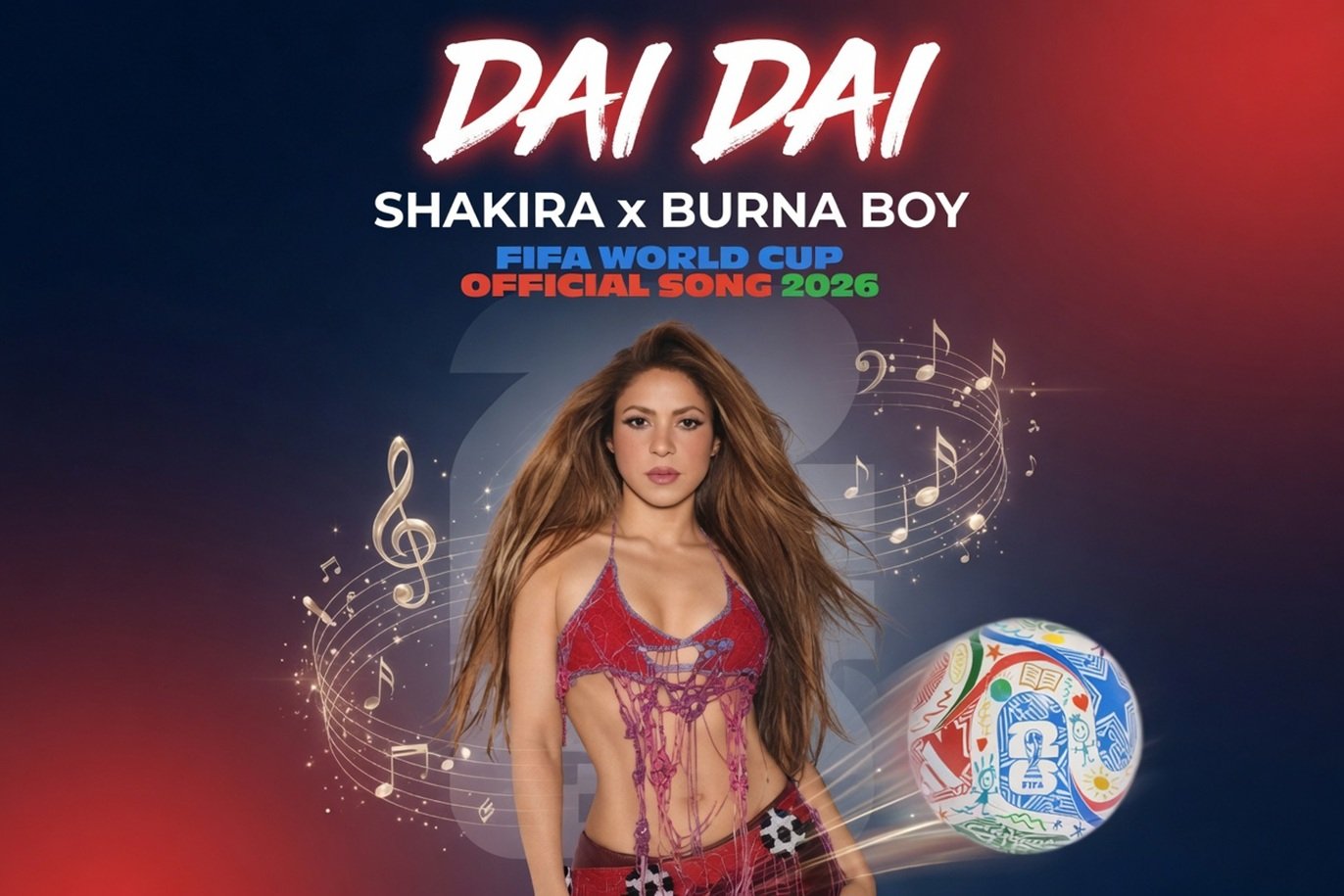
Now, the Colombian superstar is returning once again to the world’s biggest football stage with “Dai Dai,” her new collaboration with Nigerian global sensation Burna Boy for the 2026 FIFA World Cup. And according to many fans, FIFA may have called the only artist capable of reviving the magic that previous tournaments have struggled to recreate.
Sixteen years after “Waka Waka (This Time for Africa)” became a worldwide phenomenon during the 2010 South Africa World Cup, Shakira is once again stepping into the global spotlight with the difficult mission of delivering a song capable of uniting cultures, dominating playlists, and becoming inseparable from football history.
And that is no easy task. In fact, no artist has truly managed to surpass the cultural impact of “Waka Waka.”
The song became far more than a tournament anthem. It transformed into a global celebration of rhythm, dance, optimism, and multicultural identity. Even today, it remains the most streamed FIFA World Cup song on Spotify, surpassing one billion streams and earning a Guinness World Record in 2025. Its infectious chorus, African influences, and universal message turned it into one of the most recognizable sports songs ever created.
Since then, many official FIFA songs have emerged — including works by Pitbull, Jennifer Lopez, Nicky Jam, and Will Smith — but none have achieved the same lasting popularity or emotional connection across generations.
That is precisely why Shakira’s return feels so important. But this time, the mission goes beyond creating another global hit. “Dai Dai” also represents a worldwide social impact strategy driven by FIFA, Global Citizen, and Sony Music Latin.
The song was officially released as part of an initiative supporting the FIFA Global Citizen Education Fund, a program aiming to raise $100 million before the end of the tournament to provide children around the world with access to quality education and football opportunities. Part of the royalties generated by Shakira will be donated directly to the fund, while Sony Music will match the first $250,000 raised.
Beyond the music, the project seeks to position the 2026 World Cup as a cultural event with a social purpose. And once again, Shakira finds herself at the center of that narrative.
“Dai Dai” blends Latin pop with Afrobeats, creating an energetic fusion that reflects the increasingly international identity of modern football. The title comes from an Italian expression meaning “come on” or “let’s go,” and according to reports, the song incorporates several languages, including English, Spanish, French, and Japanese, as a symbolic nod to the global nature of the tournament.
The collaboration with Burna Boy is also strategic. The Grammy-winning Nigerian artist has become one of the leading ambassadors of Afrobeats worldwide, helping African music dominate international charts in recent years. Pairing him with Shakira creates a bridge between Latin America, Africa, Europe, and North America — exactly the kind of global reach FIFA hopes to project.
And perhaps no artist understands that responsibility better than Shakira herself.
This marks her fourth major musical involvement connected to the World Cup. She previously performed “Hips Don’t Lie” during the 2006 World Cup celebrations, released “Waka Waka” for the 2010 tournament, and later returned with “La La La (Brazil 2014).” Few artists in history have become so closely associated with football’s biggest event.
Part of her success comes from her extraordinary ability to blend cultures authentically. Born in Colombia and of Lebanese descent, Shakira has consistently incorporated sounds, rhythms, and dance styles from different parts of the world into mainstream pop music long before globalization became a marketing trend.
That multicultural identity helped “Waka Waka” succeed where many sports anthems fail. Instead of sounding manufactured, the song felt organic, emotional, and celebratory.
The pressure surrounding “Dai Dai” is enormous because the World Cup itself has changed dramatically. Today, audiences consume music through TikTok, Spotify, YouTube, Instagram, and viral dance trends. A modern World Cup song is no longer heard only during television broadcasts; it must survive the fast pace of the internet and become part of digital culture.
FIFA is also hoping the song helps generate positive headlines ahead of the 2026 World Cup, which will be hosted by the United States, Mexico, and Canada. The event has already faced criticism over high ticket prices, excessive commercialization, and concerns about accessibility for everyday fans. Historically, music has been one of FIFA’s most effective tools for generating excitement, emotion, and connection.
As part of this new era, Shakira will also headline the historic halftime show during the 2026 World Cup Final on July 19. It will be the first time a World Cup Final officially includes a halftime show in the style of the Super Bowl, a move that reflects FIFA’s growing effort to merge sports, entertainment, and pop culture on an unprecedented scale.
Additionally, “Dai Dai” is part of the official 2026 World Cup album, which will continue releasing new singles in the coming weeks featuring artists from different regions and musical genres. Songs already announced include “Lighter,” “Por Ella,” “Echo,” and “Illuminate,” all designed to build a multicultural soundtrack leading up to the world’s biggest sporting event.
And if history proves anything, it is that Shakira knows exactly how to deliver.
Her performances combine stadium energy with emotional intimacy in a way very few artists can replicate. Whether through choreography, multilingual lyrics, or contagious rhythms, she creates songs that feel designed for collective celebration.
That is why many believe FIFA did not choose Shakira simply out of nostalgia. They chose her because no one has truly managed to replace her.
For millions of fans around the world, the sound of the World Cup still begins with “Waka Waka.” Now, with “Dai Dai,” Shakira has another opportunity to redefine football history once again — and perhaps remind the world why she remains the undisputed queen of World Cup soundtracks.