



Trump Threatens ICE Deployment to Airports as DHS Funding Impasse Deepens
Share your love
 -Editorial
President Donald Trump said he is prepared to deploy U.S. Immigration and Customs Enforcement agents to airports nationwide as early as Monday if congressional Democrats do not agree to fund the Department of Homeland Security, escalating a weeks-long standoff over immigration enforcement policy and federal spending.
In a lengthy statement, Trump sharply criticized Democrats and said he has already directed ICE personnel to prepare for possible deployment. “If the Democrats do not allow for just and proper security at our airports, and elsewhere throughout our country, ICE will do the job far better than ever done before,” Trump said, adding that he has instructed the agency to “get ready.”
The remarks come amid an ongoing partial shutdown of the Department of Homeland Security (DHS), the result of a broader dispute in Congress over proposed reforms to federal immigration enforcement practices. The standoff has already led to two shutdowns in 2026, underscoring deep partisan divisions over border security, civil liberties, and the role of federal agents.
The first shutdown lasted four days, from Jan. 31 to Feb. 3, and affected roughly half of federal agencies after lawmakers failed to pass a short-term funding extension. A second shutdown began Feb. 14, when negotiations over a continuing resolution broke down, leaving DHS without full appropriations.
At the center of the dispute are a series of reforms proposed by congressional Democrats following the killing of Alex Pretti by U.S. Customs and Border Protection agents. The proposals seek to impose new standards and limitations on federal immigration enforcement operations.
Among the provisions, Democrats have called for requiring judicial warrants, rather than administrative warrants, before agents can enter private property, and mandating that agents verify individuals are not U.S. citizens before detaining them. Other measures would prohibit agents from wearing face coverings, require standardized uniforms and visible identification, and mandate the use of body cameras.
Additional proposals would restrict enforcement activity near sensitive locations such as schools, medical facilities, child care centers, places of worship, polling sites, and courthouses. The reforms would also bar agents from conducting stops or searches based on factors such as a person’s location, occupation, language, accent, race, or ethnicity.
Democrats have also proposed requiring federal agencies to obtain consent from state or local governments before undertaking large-scale enforcement operations, removing agents from duty while under investigation, and allowing local authorities to investigate and prosecute alleged crimes committed by federal officers. Other provisions call for expanded training, updated use-of-force policies, and guaranteed access to legal counsel for detained individuals.
Republicans have pushed back against the proposals, describing them as excessive and arguing they would create unnecessary bureaucracy while increasing risks to federal agents. GOP lawmakers have instead advocated for measures to strengthen protections for officers and require greater cooperation between local jurisdictions and federal immigration authorities. Despite the sharp differences, some lawmakers have suggested there is still room for negotiation.
The funding lapse has begun to affect DHS operations, though the impact has varied across agencies. Immigration and Customs Enforcement, Customs and Border Protection, and U.S. Citizenship and Immigration Services receive a significant portion of their funding through fees and mandatory appropriations, allowing them to continue many operations despite the shutdown.
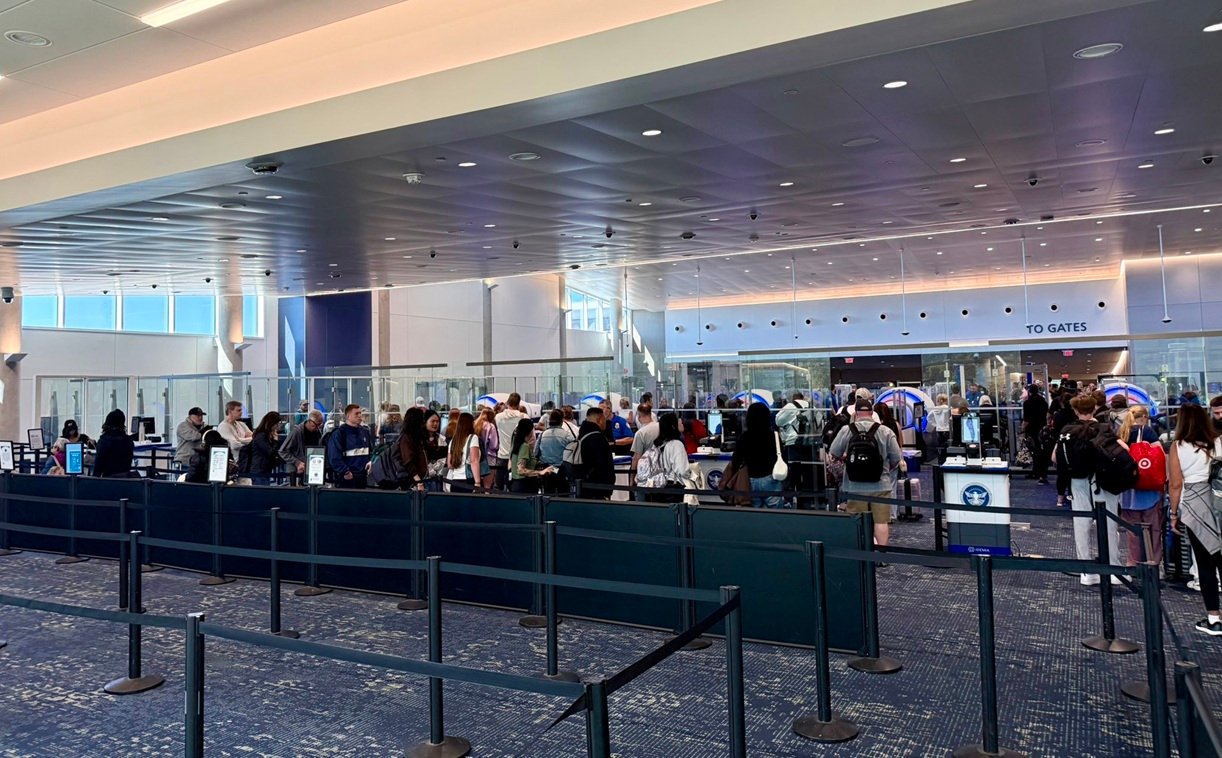
However, other components have faced more immediate strain. Transportation Security Administration (TSA) employees are expected to begin missing full paychecks by mid-March, raising concerns about staffing shortages and potential disruptions at airports nationwide.
DHS officials have reported rising absenteeism among TSA personnel, with callout rates reaching as high as 55% at some airports. The department has also said that hundreds of TSA officers have resigned since the shutdown began, adding to concerns about the agency’s ability to maintain normal operations.
Earlier in the shutdown, DHS temporarily suspended the TSA PreCheck and Global Entry programs, though the PreCheck suspension was reversed within hours. The agency has since reduced other services, including airport courtesy escorts and certain non-disaster responses from the Federal Emergency Management Agency.
It remains unclear under what legal authority ICE agents could be deployed to perform airport security functions, which are typically handled by the TSA. DHS has not publicly detailed any operational plans for such a move, and aviation security experts have raised questions about training, jurisdiction, and coordination.
The political standoff intensified in mid-February when Senate Democrats blocked a short-term funding extension that would have kept DHS operating while negotiations continued. Both the House and Senate then recessed for a scheduled break, effectively ensuring that funding would lapse. Lawmakers were placed on notice to return if an agreement was reached, but no deal materialized.