


2026 FIFA World Cup Draw in Washington: Hosts, Groups — and a Peace Prize That Sparked Debate
Share your love
 -Editorial
On December 5, 2025, the 2026 FIFA World Cup Final Draw unfolded at the John F. Kennedy Center for the Performing Arts in Washington, D.C., marking a defining moment for the biggest men’s World Cup in history. The event officially determined the group-stage matchups — and blended sports, diplomacy, and controversy in a single evening that captivated global audiences.
Amid the ceremony’s glittering production, the draw delivered both sporting excitement and an unexpected political twist that may echo long past the tournament’s opening kickoff.
The 2026 World Cup will be jointly hosted by Mexico, the United States, and Canada — the first tri-national tournament in FIFA history. It is also the first edition to feature 48 teams, expanding its scale, reach, and logistical complexity.
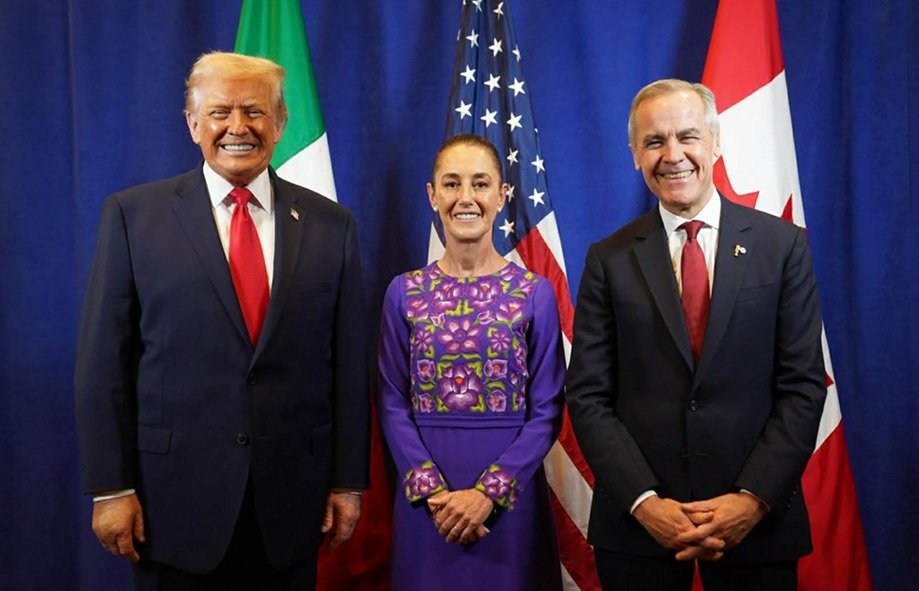
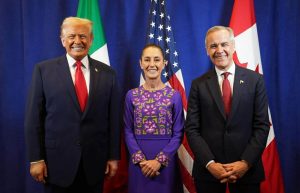
Onstage at the Kennedy Center, the leaders of all three host nations appeared together: Mexican President Claudia Sheinbaum, U.S. President Donald J. Trump, and Canadian Prime Minister Mark Carney. Their joint presence symbolized continental partnership as the region prepares to welcome millions of fans.
For Mexico, the draw carried deep national meaning. The Mexican squad was placed as the top seed in Group A, joining South Africa, South Korea, and the winner of a European playoff that includes Denmark, Ireland, North Macedonia, and the Czech Republic.
The stakes are historic. The World Cup will open on June 11, 2026, at Mexico City’s famed Estadio Azteca — where Mexico will face South Africa in what will be the first match of the expanded 48-team format. This marks the third time Azteca opens a World Cup, an unmatched distinction in global football.
Mexico will host 13 matches across Mexico City, Guadalajara, and Monterrey, reintroducing the nation as a central stage of the sport after previously hosting in 1970 and 1986. For many fans, the draw reinforced Mexico’s long-standing football heritage and its renewed role in the world’s most-watched sporting event.
The upcoming edition marks a turning point in World Cup history. With 48 national teams competing, the tournament will feature a total of 104 matches — the largest schedule ever. The structure now includes 12 groups of four teams, followed by a newly expanded Round of 32, then the familiar knockout rounds leading to the final.
The games will span 16 host cities: Toronto and Vancouver in Canada; Mexico City, Guadalajara, and Monterrey in Mexico; and 11 cities across the United States. The geographic scale underscores FIFA’s ambition to create the most globally accessible tournament to date.
For teams and fans alike, the draw provided an early map of the journey ahead — from travel demands and match intensity to potential rivalries brewing months before the first whistle sounds. Organizers now face the task of aligning transportation systems, stadium operations, and international coordination across three countries.
What began as a strictly sporting ceremony shifted tone when FIFA unexpectedly introduced a new award: the first-ever FIFA Peace Prize. Its inaugural recipient was U.S. President Donald J. Trump.
Presented by FIFA President Gianni Infantino, the award was described as honoring “exceptional and extraordinary actions for peace and unity.” Trump accepted with a brief speech, calling it “one of the great honors” of his life and framing the recognition as validation of his global diplomatic efforts.
The moment, however, immediately sparked sharp debate.
Supporters praised the symbolism of using football — a sport long promoted as a tool for unity — to highlight efforts toward peace. Critics, meanwhile, questioned the timing, purpose, and transparency of the award. Many raised concerns about introducing a political accolade during a sports ceremony, warning it could blur lines between athletics and geopolitics and risk FIFA’s image of neutrality.
Social-media reactions captured the polarizing effect, with some celebrating the gesture and others calling it inappropriate or performative. Questions also emerged about the criteria behind the prize and whether it should have been presented in a non-sporting context.
For many across North America, this draw represents a moment of optimism and pride. Mexico prepares for an unprecedented third World Cup, Canada strengthens its growing football identity, and the United States moves into a central hosting role for a global event expected to draw record-breaking attendance.
For organizers, the draw signals the start of a demanding operational countdown: 104 matches across three nations, millions of visiting fans, heightened security planning, and complex cross-border coordination.
Yet the evening also highlighted a pressing question: Can global sporting events remain insulated from political influence — or has that boundary become increasingly porous?
With FIFA using the World Cup draw to introduce a political award, the event illustrated how sport can amplify global narratives far beyond the pitch.
As the countdown to June 2026 begins, the world’s attention now turns to the competition itself — to the stadiums, the teams, the goals, and the stories that will define the tournament — and to whether the World Cup can uphold the spirit of unity it so publicly champions.