


U.S. and Mexico Sign Agreement to Address Tijuana River Sewage Crisis
Share your love
 -Editorial
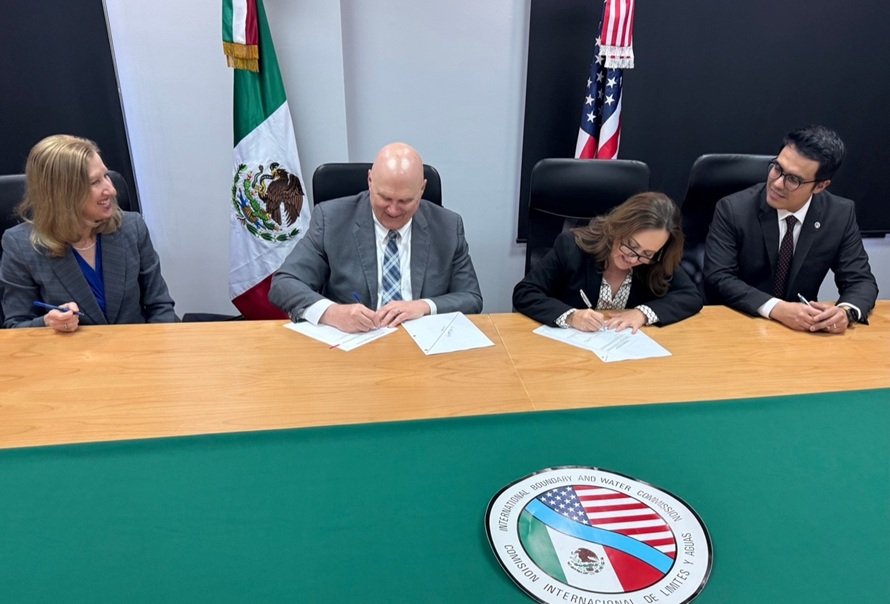
The U.S. Environmental Protection Agency (EPA) and Mexico’s Secretariat of Environment and Natural Resources have signed a new binational agreement, Minute 333, aimed at addressing the decades-long Tijuana River sewage crisis. The agreement sets out infrastructure projects, enhanced monitoring, research initiatives, and planning to account for future population growth in Tijuana.
The Tijuana River sewage crisis involves the flow of untreated wastewater from Mexico into Southern California, leading to long-term beach closures, environmental degradation, foul odors, and public health concerns. Previous agreements, including Minute 328 signed in 2022, were seen as insufficient by San Diego-area residents and environmental officials.
Minute 333 codifies commitments made under a July memorandum of understanding (MOU) between EPA Administrator Lee Zeldin and Mexican Secretary Alicia Bárcena Ibarra, establishing a framework for a permanent solution without requiring additional U.S. taxpayer funding for Mexican-side projects.
Key provisions of Minute 333 include the creation of an operations and maintenance account at the North American Development Bank to support future project upkeep, development of a Tijuana water infrastructure master plan within six months, and the construction of a sediment basin in Matadero Canyon, near the U.S.-Mexico border, before the 2026–2027 rainy season. Mexico is also set to build the Tecolote-La Gloria Wastewater Treatment Plant with a capacity of 3 million gallons per day by 2028.
The agreement also establishes a binational working group to assess the feasibility of expanding the San Antonio de los Buenos Wastewater Treatment Plant from 18.26 million gallons per day to 43.37 million gallons per day and evaluating the potential for an ocean outfall. Technical information sharing, adoption of wastewater and stormwater management best practices, and strengthened public communication are also included.
Officials said Minute 333 reflects an urgent, cooperative approach to resolving a longstanding environmental and public health problem. Administrator Zeldin noted that the agreement accounts for the inevitable population growth in Tijuana and surrounding areas, setting the framework for sustainable solutions. U.S. and Mexican officials emphasized that the agreement demonstrates the potential for cross-border collaboration in protecting communities and the environment.
With the signing of Minute 333, the U.S. has met its obligations under the 2025 MOU, including the 10 million-gallon-per-day expansion of the South Bay International Wastewater Treatment Plant, a review of previous Minute 328 projects, and the release of public updates on project implementation. Both nations will continue to coordinate closely to ensure the timely completion of agreed-upon measures.