


Rubio Defends U.S. Actions in Venezuela, Cites Court Orders and Oil Sanctions Amid Regional Concerns
Share your love
 -Editorial
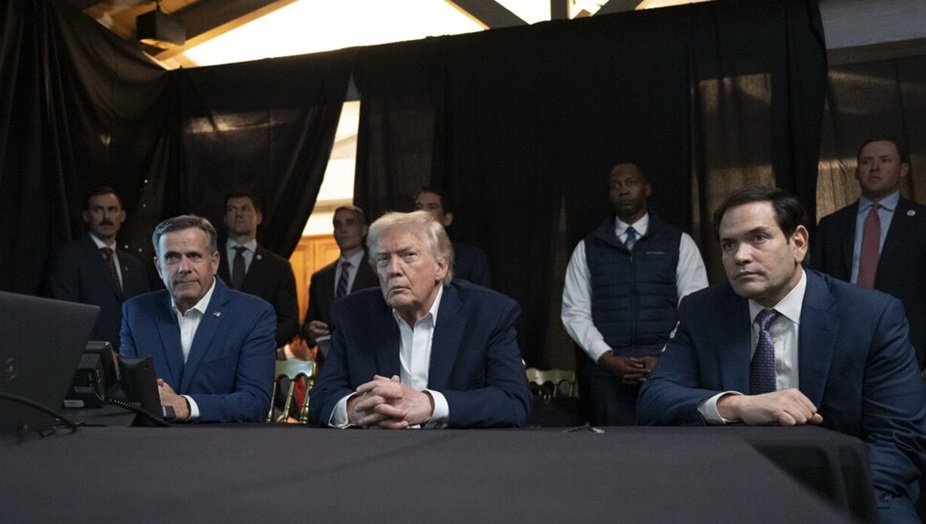
In a detailed interview on ABC’s “This Week with George Stephanopoulos,” U.S. Secretary of State Marco Rubio defended the United States’ recent operations in Venezuela, citing court-authorized sanctions and an oil “quarantine” as part of a broader law-enforcement and national-security strategy. Rubio rejected claims that the U.S. is unlawfully governing the South American nation, framing the actions as legally justified and targeted at corrupt officials rather than the Venezuelan people.
“Our legal authority stems from the court orders in place,” Rubio stated. “What we are directing is the course this situation will take moving forward.” He emphasized that recent measures—including the interception and seizure of sanctioned vessels—are designed to pressure Venezuela’s leadership to implement meaningful political and security reforms.
Rubio detailed the U.S. blockade on Venezuelan oil exports, describing it as a measure intended to prevent the country’s oil revenues from benefiting what he characterized as a small group of corrupt officials. “Venezuela’s oil sector is operating far below capacity and has become a pirate operation,” Rubio said, referring to discounted sales of crude in which profits are diverted away from the national treasury.
U.S. naval and Coast Guard forces are positioned to intercept ships carrying oil in violation of sanctions. According to Rubio, this leverage remains a central tool for the administration, with the expectation that it will yield tangible results, including reducing Venezuela’s role as a conduit for transnational criminal organizations, narcotics trafficking, and operations by adversaries such as Iran and Hezbollah.
The interview also addressed the recent arrest of Venezuelan President Nicolás Maduro. Rubio described the operation as a law-enforcement action based on a sealed U.S. indictment and emphasized that it did not constitute an invasion. “This was an arrest operation. He was arrested on the ground in Venezuela by FBI agents, read his rights, and removed from the country,” Rubio said. He acknowledged limited military support from the U.S. Department of Defense to protect personnel during the operation but stressed that congressional approval was not sought due to operational security concerns.
Rubio clarified that U.S. officials may engage with Venezuelan authorities for specific operational needs—such as deportation flights or infrastructure management—but said this does not equate to recognizing the legitimacy of the Maduro regime. “Rhetoric is one thing. What we are going to react to is very simple—what do you do?” he said, noting that U.S. policy will hinge on concrete actions, including dismantling drug networks, expelling foreign militant groups, and cooperating against organizations such as the ELN and FARC.
The Venezuelan crisis is also raising questions about the U.S. security posture in neighboring countries. Rubio highlighted concerns about Colombia, where lingering FARC dissident elements and drug-trafficking organizations could exploit regional instability. Analysts suggest that sustained U.S. enforcement in Venezuela may pressure Colombian authorities to cooperate more fully on counter-narcotics efforts, though risks of criminal displacement remain.
In Mexico, the focus is primarily on border security and migration flows. Experts warn that Venezuelan instability, compounded by U.S. sanctions, could increase irregular migration through Mexico toward the United States. “Mexico’s border management is critical in mitigating spillover effects from Venezuela’s economic collapse,” said Dr. Ana Velázquez, a Latin America security analyst at the Wilson Center.
Rubio also referenced President Donald Trump’s previous statements regarding Greenland, framing territorial concerns as tied to U.S. strategic interests. Trump has suggested that Greenland’s territory could be necessary for national security and defense, raising concerns among experts about the precedent such claims could set for U.S. involvement in sovereign territories deemed strategically valuable. “Any discussion about territorial security must take international law and national sovereignty into account,” said Professor Erik Johansson, an international relations scholar at Georgetown University.
Meanwhile, Iran remains a focal point in U.S. strategic calculations in the Western Hemisphere. Rubio pointed to the presence of Iranian operatives and proxies in Venezuela as justification for enforcement actions. “We will no longer have in our hemisphere a Venezuela that serves as a crossroads for many of our adversaries around the world,” Rubio said. Experts argue that while Iran’s direct influence in the region is limited, its alliances in Latin America could facilitate financing, logistics, and technology transfers counter to U.S. interests.
Rubio also addressed the future of Venezuela’s oil industry, noting that Chevron is currently the only U.S. company operating in the country. He predicted strong interest from Western energy firms if the sector undergoes reform. Analysts highlight that U.S. Gulf Coast refineries are particularly well suited to process Venezuela’s heavy crude, creating potential economic incentives for deeper engagement. “Reintegrating Venezuela’s oil into the global market could help stabilize prices but also complicate sanctions enforcement,” said Maria Sánchez, an energy policy expert at Rice University.
The operations have sparked debate over legality and precedent. Rubio repeatedly emphasized that all actions were grounded in U.S. court orders. However, international law experts caution that unilateral interventions, even when framed as law enforcement, risk escalating diplomatic tensions. “The United States is operating in a legal gray zone,” said Professor Kenneth Rothwell of the University of Miami School of Law. “Actions against a sovereign government must balance enforcement objectives with respect for international norms.”
The U.S. strategy signals sustained pressure on Venezuela’s government and the criminal networks linked to drug trafficking and armed groups. Success will depend not only on sanctions enforcement and intelligence operations, but also on cooperation from regional partners. In Colombia, the risk of escalating violence and drug trafficking has prompted President Trump to warn that the country could become another source of regional instability if groups such as FARC dissidents and the ELN—responsible for more than 40% of coca cultivation according to the United Nations Office on Drugs and Crime (UNODC, 2025)—are not effectively contained. In Mexico, despite President Claudia Sheinbaum’s emphasis on security and development, the country continues to face record levels of homicide and extortion. According to official figures, more than 30,000 homicides and nearly 130,000 extortion reports were registered in 2025, with cartels such as the CJNG and Sinaloa exerting territorial control in multiple regions. Analysts note that while Trump’s claim that “cartels are running Mexico” may sound hyperbolic, it reflects a documented reality of criminal influence in significant parts of the country.
Greenland represents another strategic element in U.S. planning. Trump and his advisors have argued that the island’s Arctic location is critical for defense and monitoring Russian and Chinese military expansion. Greenland and Denmark, however, have repeatedly reaffirmed their sovereignty and rejected any attempt at U.S. control or purchase. Finally, Iran—while lacking a direct military presence in Latin America—has established financial and logistical ties with Venezuela, facilitating fuel shipments, funding criminal networks, and potentially transferring technology, reinforcing U.S. perceptions of a hemispheric security threat.
Taken together, these dynamics underscore that U.S. pressure on Venezuela is part of a broader strategy with regional and global implications. Balancing security objectives, international cooperation, respect for sovereignty, and humanitarian considerations will be central to determining whether these policies achieve their goals without further destabilizing the region.
Rubio concluded that continued sanctions, operational enforcement, and diplomatic engagement form a coordinated strategy aimed at reshaping Venezuela’s political and economic landscape. “If you are a sanctioned vessel and you are headed toward Venezuela, you will be seized,” Rubio said, underscoring the administration’s intent to use leverage until meaningful reforms are enacted.
Expert assessments suggest that while U.S. actions may disrupt corrupt networks and deter adversarial influence, they also carry risks of regional instability, migration pressures, and international criticism. Analysts recommend close monitoring of Venezuela’s internal response and the broader ripple effects across Latin America.