

Mexico Marks Seven Years of Transformation as Sheinbaum Signals a Forward-Looking Vision for U.S.–Mexico Relations
Share your love
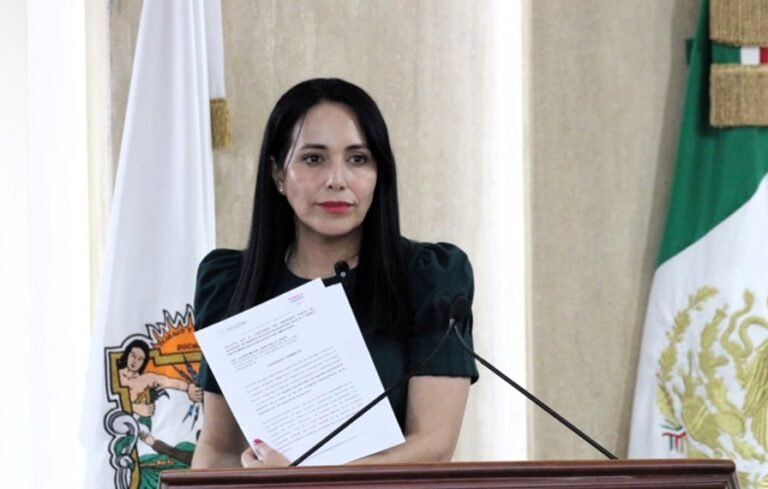
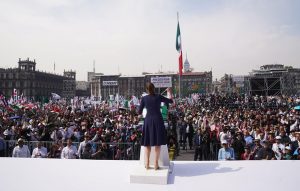 Mexico City — In front of more than 600,000 people at the Zócalo of Mexico City, President Claudia Sheinbaum celebrated “seven years of transformation,” marking the anniversary of the start of the so-called “Fourth Transformation.” In a speech brimming with patriotic rhetoric, she argued that the changes her administration has delivered are not only economic and social, but deeply moral — part of a “humanist” project to remake Mexican society.
But as the cheers of the crowd echoed around the Plaza de la Constitución, a more delicate act of political balancing was unfolding thousands of miles away in Washington: Sheinbaum’s first face-to-face encounter with Donald J. Trump, alongside Canadian Prime Minister Mark Carney, at the draw for the 2026 FIFA World Cup 2026 — an event that may well signal a recalibration in Mexico’s relations with the United States.
During the mass gathering in Mexico City, Sheinbaum offered a bold summary of what she argued has been achieved under the Fourth Transformation (4T). According to her statement:
- From 2018 to 2024, 13.5 million Mexicans reportedly rose out of poverty; she claimed Mexico is now the second-least unequal country in the Americas.
- The daily minimum wage will reach 315 pesos on January 1, 2026 — a 154 % increase since 2018.
- Inflation is reportedly under control: by the end of October 2025, it reached 3.57 %.
- Foreign Direct Investment (FDI) surged to a historic record in Q3 of 2025: over US$ 40 billion.
- The peso-dollar exchange rate closed on December 5 at 18.18 pesos per dollar.
- In 2025 alone, some 551,000 formal jobs were created; unemployment stood at 2.6 %, among the lowest globally. Meanwhile, foreign reserves of the Banco de México (Banxico) reached US$ 250 billion.
Beyond macroeconomics, she highlighted labor reforms: the right to free and secret union votes, creation of labor-conflict conciliation centers, reduction in retirement-fund (Afore) commissions, elimination of subcontracting, social security for gig-economy workers, and a proposed constitutional reform to institute a 40-hour workweek by 2027.
In social policy, she noted that welfare programs now reach 32 million of an estimated 35 million families; a universal health-care credentialing process begins in 2026; education capacity is expanding — 37,500 new high-school spots and 124,000 free university slots this year alone.
Sheinbaum also mentioned construction efforts: 300,000 new homes (towards a 1.2 million housing goal), debt relief for five million beneficiaries of housing funds, new water-management and irrigation infrastructure, passenger and freight rail revivals (including the Tren Maya), improved roads, and the nationalization or recovery of energy companies like Petróleos Mexicanos (Pemex) and Comisión Federal de Electricidad (CFE).
Finally, she pointedly framed the day’s events and her global diplomacy as evidence that Mexico can maintain a respectful, collaborative relationship with the United States — “defending always our sovereignty, with collaboration and without subordination,” she said — rejecting any notion that Mexico is or ever will be “a colony or protectorate.”
The tone was decisive: this, she argued, is a new Mexico — independent, sovereign, prosperous, and just.
Just a day earlier, Sheinbaum had traveled to Washington, D.C., to attend the draw for the 2026 World Cup — jointly hosted by the U.S., Mexico, and Canada.
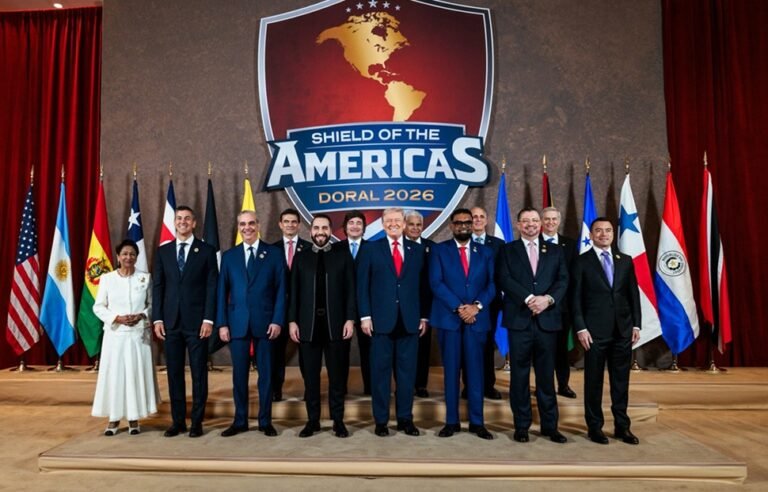
At the ceremony, groups of fans from all three nations cheered; jubilant images captured Sheinbaum, Trump, and Carney on stage together under the lights — a tableau that newspapers described as “cordial,” “friendly,” even “relaxed.”
In private, the trio reportedly met for roughly 45 minutes after the event. For Sheinbaum, the focus was clear: “the great opportunity that the 2026 FIFA World Cup represents for the three countries,” and a pledge to “continue working together on trade issues with our teams.”
Analysts have stressed the symbolic weight of the moment: the first in-person meeting between Sheinbaum and Trump since he returned to the White House, at a time when U.S.–Mexico relations have endured friction over tariffs, migration, and security.
While the festive atmosphere in Mexico City and the handshake in Washington are evocative, the road ahead may be far from smooth.
- Economic Promises vs. Global Uncertainties
- The sweeping economic and social advances Sheinbaum outlined — from poverty reduction to job creation, to the massive jump in minimum wage — will be hard to sustain if global headwinds buffet demand or trigger capital flight. Record-level foreign investment and record reserves offer a buffer, but sustaining growth and inflation control will depend on internal and external stability alike.
- Expectations around labor and pension reforms, while politically popular, could create tensions with employers, investors, and perhaps international firms — especially as Mexico continues to attract foreign capital.
- Trade Relations Under Pressure
- Despite the optimistic tone of the Washington visit, U.S. tensions remain — especially surrounding tariffs, supply chains, and the upcoming renegotiation of the United States–Mexico–Canada Agreement (USMCA / T-MEC), due for review in 2026.
- The Trump administration has previously threatened significant trade barriers on goods from Mexico (especially in steel, aluminum, automobiles) and remains skeptical of Mexico’s ability / willingness to curb migration and drug trafficking.
- Navigating these pressures while preserving sovereignty — as Sheinbaum insists — will require careful diplomacy.
- Balancing Domestic Ideals with International Realities
- The domestic agenda is wide-ranging, ambitious, and transformative — but scale comes with complexity: financing new housing, universal health systems, and expanded education en masse, while promising increased subsidies and labor protections, could stretch Mexico’s fiscal capacity.
- There is also the risk of political polarization: vast social programs and redistribution efforts invariably draw criticism from business sectors or segments that perceive them as threats to economic liberalism or investment incentives.
- Finally, public expectations will now be higher than ever. Having promised concrete results, the government will need to deliver over the coming months — meaning attention to inflation, employment, and living standards will likely intensify.
A Cautiously Optimistic Outlook for U.S.–Mexico–Canada Relations
Despite potential flashpoints, the tone struck in Washington offers reasons for guarded optimism:
- The fact that Sheinbaum and Trump chose to meet publicly and privately, at a high-profile sporting event, suggests both see value in resetting the relationship — or at least in managing it more pragmatically. Sports diplomacy, long dismissed by policy purists, may have provided the “neutral ground” needed to open channels of communication.
- For Mexico, the World Cup represents more than sport: millions of visitors, infrastructure investment, cross-border tourism and commerce — the economic and reputational upside is substantial. A cooperative approach makes sense for all three hosts.
- Sheinbaum’s framing — collaboration without subordination — may resonate with a U.S. administration seeking stable supply chains, controlled migration flows, and regional cooperation while avoiding charges of neocolonialism.
In Mexico, the political class and civil society will now watch closely. If Sheinbaum’s government can demonstrate that the social and economic promises translate into tangible improvements in living standards — and if Mexico can manage trade and bilateral tensions more diplomatically — the Washington handshake may yet prove to be the turning point for a new era in North American relations.
But the path ahead will require discipline, realism, and possibly, difficult compromises.
What Does This Mean for Mexico’s Future?
Sunday’s celebration at the Zócalo was more than a political rally: it was a moment for national self-image. The message was clear — a transformed Mexico, proud, sovereign, socially just, ambitious. Yet, that image now collides with the hard realities of geopolitics: trade pressures, global economic uncertainty, migration, external dependencies, and the influence of international capital.
The Washington visit underscores a truth: the fate of domestic transformation cannot be separated from foreign policy. The world is watching. With the 2026 World Cup on the horizon, Mexico has a unique chance to showcase not only its stadiums and tourism, but its capacity for leadership, cooperation, and national dignity.
Ultimately, the success of the Fourth Transformation — at home and abroad — will depend on whether lofty promises survive the test of markets, laws, and global currents.