
Related Articles
 -Editorial
A 37-year-old Minneapolis man was fatally shot on Jan. 24 by U.S. Border Patrol agents during a federal immigration operation, marking the third deadly shooting involving federal immigration officers in the city in just over two weeks and intensifying public outrage, protests, and tensions between local officials and the Trump administration.
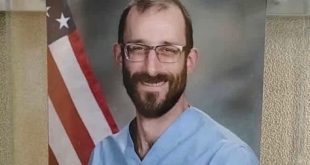
The man, identified as Alex Jeffrey Pretti, was shot multiple times shortly after 9:05 a.m. CST near the intersection of 26th Street and Nicollet Avenue. He was transported to a nearby hospital, where he was pronounced dead, authorities confirmed.
According to the Department of Homeland Security, federal agents were conducting an operation to detain an undocumented immigrant whose alleged criminal history included domestic assault, disorderly conduct, and driving without a valid license. DHS said Pretti approached Border Patrol agents with a handgun, prompting an agent to deploy chemical spray and open fire after attempting to disarm him. The agency did not clarify whether Pretti was holding the firearm at the time or whether it was merely on his person.
Video footage reviewed by multiple news organizations showed Pretti holding what appeared to be a cellphone in the moments before the shooting and did not visibly depict him armed. The videos show several federal agents wrestling Pretti to the sidewalk before gunfire erupted. Independent analysis found that approximately 10 shots were fired within several seconds.
Witness accounts varied. One witness said agents attempted to enter a nearby doughnut shop but were denied access, prompting them to call for backup. Another said Pretti appeared to be directing traffic and assisting people in the area when agents confronted him. Multiple witnesses reported that Pretti was pepper-sprayed and forced to the ground before shots were fired.
Moments after the shooting, agents were seen performing chest compressions on Pretti. He was later pronounced dead at the hospital.
Pretti was a U.S. citizen, born in Illinois and raised in Wisconsin. He graduated from Preble High School in Green Bay in 2006, attended the University of Minnesota, and held an active Minnesota nursing license issued in 2021. He worked as an intensive care nurse at the Minneapolis Veterans Affairs hospital.
Local officials said Pretti was a lawful gun owner with a valid Minnesota concealed carry permit. Law enforcement records showed no serious criminal history, reflecting only traffic-related offenses. A neighbor told The New York Times that Pretti was “not a violent person.” He had also participated in protests earlier this month following another fatal shooting involving a federal agent.
Pretti’s death was the third fatal shooting involving federal immigration officers in Minneapolis since early January. On Jan. 7, Renée Nicole Good, 37, was fatally shot by an Immigration and Customs Enforcement (ICE) agent during a traffic encounter that sparked national attention and days of protests. One week later, immigration officers shot Julio Cesar Sosa-Celis, a Venezuelan man, during a separate incident, authorities said.
Congressional Context: Efforts to Defund and Dismantle ICE
The latest killing comes as members of the U.S. House of Representatives advance new legislative initiatives aimed at sharply restricting — and in some cases dismantling — federal immigration enforcement, particularly ICE. In recent weeks, progressive lawmakers have called for defunding immigration detention and electronic monitoring programs, arguing that enforcement agencies have operated with insufficient oversight while contributing to civilian deaths and escalating confrontations nationwide.
One of the most prominent proposals, introduced by Reps. Delia C. Ramirez (IL) and Yvette Clarke (NY), would eliminate federal funding for immigration detention, terminate existing detention contracts, prohibit new ones, require DHS to remove ankle monitoring devices, and redirect funds toward community-based services such as housing and healthcare. While the legislation has not yet been scheduled for a vote and must first advance through committee review, it reflects growing momentum among House Democrats to curtail ICE’s enforcement authority.
These efforts unfold amid contentious negotiations over Homeland Security appropriations, which currently allocate billions of dollars annually to ICE custody and enforcement operations. Supporters of defunding initiatives argue that recent deaths — including the Minneapolis shootings — demonstrate the urgent need for reform, while opponents contend that enforcement is necessary for public safety. As investigations continue, clashes between federal immigration policy and local governance have increasingly moved from the streets into Congress.
Protests, Clashes, and National Response
Following Pretti’s death, more than 100 people gathered at the shooting site, blocking nearby intersections and chanting slogans critical of federal law enforcement. Some nearby businesses opened their doors to protesters, offering food and water.
Clashes later broke out between demonstrators and federal officers. Authorities said agents used tear gas, pepper spray, and stun grenades to disperse crowds. At least one protester was pepper-sprayed, and two people were arrested after attempting to cross police lines.
DHS Assistant Secretary Tricia McLaughlin said federal officers were assaulted during the unrest and claimed one agent’s finger was severed. Federal officials released images showing the injury.
Hennepin County Sheriff Dawanna Witt requested assistance from the Minnesota National Guard, citing concerns about unrest near the Bishop Henry Whipple Federal Building, where detainees were being held. Gov. Tim Walz later authorized the Guard’s activation to support public safety operations.
The shooting disrupted citywide events, including the postponement of an NBA game between the Minnesota Timberwolves and Golden State Warriors, scheduled for that afternoon in downtown Minneapolis due to security concerns.
Hennepin County Attorney Mary Moriarty called for the scene to be secured by local authorities and said her office was coordinating with the Minnesota Bureau of Criminal Apprehension. Minneapolis Police Chief Brian O’Hara said federal officials initially blocked local police from accessing the scene, even after state investigators obtained a warrant. Armored FBI vehicles later arrived.
Federal officials said a firearm and two magazines were recovered. DHS released a photograph of the weapon. Minnesota officials reiterated that Pretti was legally permitted to carry the firearm.
In a statement, Border Patrol commander Gregory Bovino said the agent who fired had eight years of experience and extensive training, adding that the incident appeared to involve an individual who intended to harm law enforcement.
Gov. Walz described the killing as “sickening” after speaking with Trump administration officials and called for an end to current federal immigration operations in Minnesota. U.S. Sens. Amy Klobuchar and Tina Smith also criticized the continued federal presence.
At the White House, officials said President Donald Trump was briefed. Trump later accused Walz and Minneapolis Mayor Jacob Frey of inciting unrest. Vice President JD Vance blamed local leaders for what he described as a lack of cooperation with ICE.
Before any investigation was completed, senior White House adviser Stephen Miller labeled Pretti a “domestic terrorist” and claimed he attempted to assassinate federal officers. No federal agency publicly released evidence supporting that claim.
Attorney General Pam Bondi criticized Minnesota’s sanctuary policies and faulted state and city leaders for the violence. A social media post by a U.S. attorney suggesting that approaching law enforcement with a firearm justified being shot drew condemnation from a national gun rights organization, which emphasized that concealed carry permit holders retain constitutional protections.
The shooting occurred amid heightened federal immigration activity in Minnesota and a growing protest movement that has included marches, airport demonstrations, and calls for a statewide economic boycott. Community leaders, labor unions, and faith groups have demanded the withdrawal of federal agents and independent investigations.
Minnesota, which has experienced repeated periods of civil unrest in recent years — including protests following the 2020 killing of George Floyd and a deadly mass shooting at a Minneapolis church in 2025 — now faces renewed scrutiny over federal enforcement tactics, interagency authority, and the expanding role of immigration officers in local policing.