



Calexico Moves Toward Permanent Citywide Ban on New Data Centers
Share your love

-Editorial
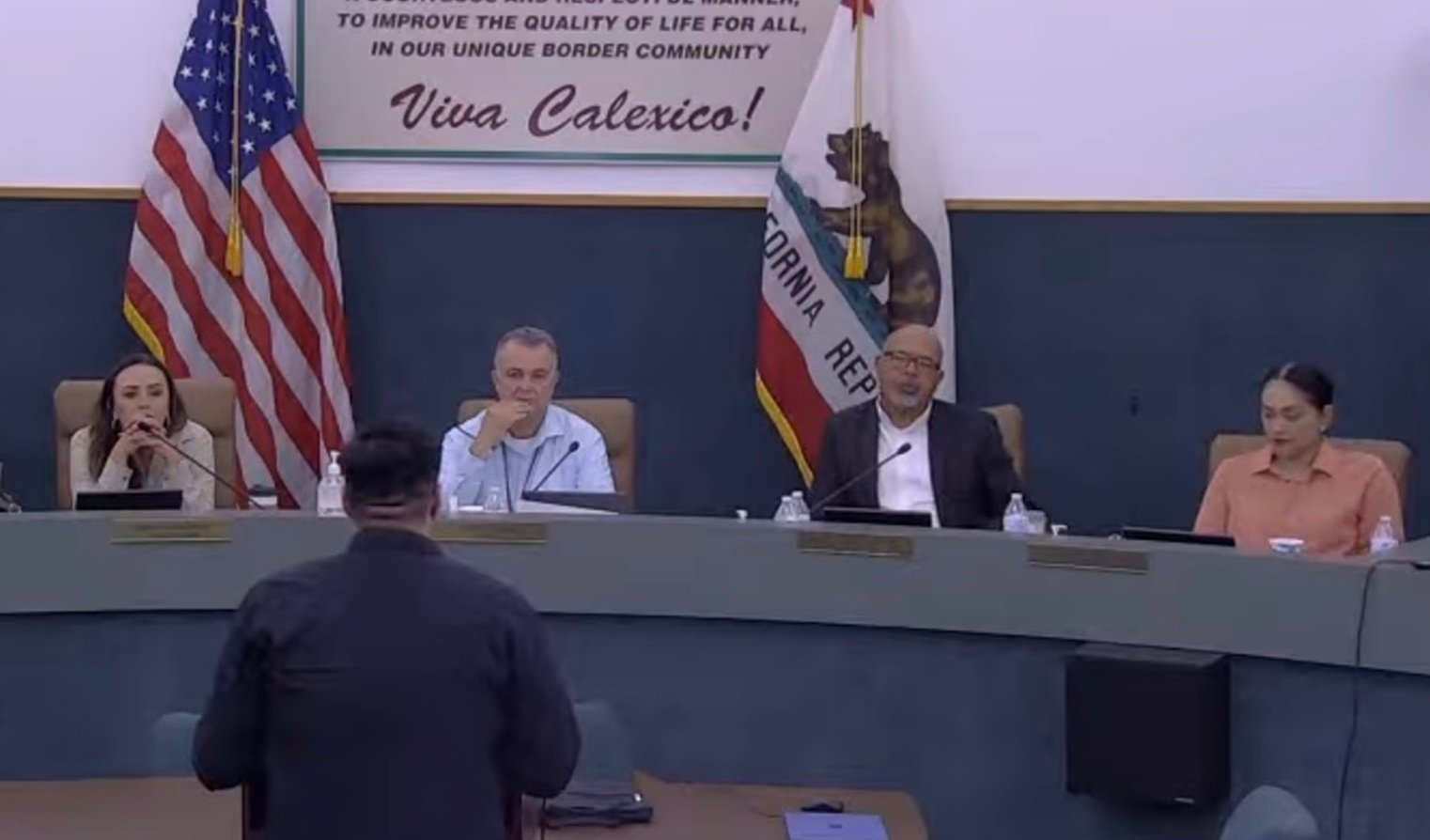
After a marathon session that almost ran into midnight, the Calexico City Council approved the first reading of an ordinance banning new data centers citywide, taking a definitive step toward a permanent prohibition across all zoning districts.
The ordinance will return to the City Council for a second reading and final adoption at its Sept. 16 meeting. The ban would take effect 30 days after final approval.
The measure, presented during a Sept. 2 public hearing by City Manager Benjamin Martinez and City Attorney Laura Estrada, adds Article XII to Chapter 17.11 of the Calexico Municipal Code. If given final approval, the regulation will bar the establishment, operation, and permitting of new data center facilities throughout the city.
City staff cited the heavy resource demands of data centers as the primary reason for recommending the ban. According to municipal reports, such facilities require substantial amounts of electricity and water while generating noise, heat, emissions, and potential hazardous waste concerns that conflict with local infrastructure capacity and long-term sustainability goals.
The council’s decision follows several months of deliberation on how to handle an influx of data center proposals in the region. City leaders first directed staff on June 3 to evaluate options for a potential moratorium following a statewide rise in similar developments.
Staff initially recommended a temporary urgency moratorium during a July 1 meeting under California Government Code Section 65858. However, the council rejected a temporary hold in favor of a permanent solution, directing staff to draft an amendment to the municipal code that culminated in Wednesday’s public hearing and first-reading approval.
Under the draft law, a data center is defined as any building or structure dedicated to housing networked computer systems for remote data storage and processing, along with support infrastructure such as utility substations, cooling facilities, and backup generators.
The ordinance includes exemptions for accessory server rooms that directly support an otherwise permitted primary business, wireless communication facilities, and uses authorized under state or federal law. Violations will be classified as public nuisances and misdemeanors.
Staff determined the zoning amendment is exempt from the California Environmental Quality Act (CEQA), noting that a development prohibition has no potential to cause adverse physical environmental changes. The city reported no direct fiscal impact associated with the measure beyond standard codification costs.