


Indigenous Knowledge Guides Amazon Conservation Efforts
Share your love
 -Editorial
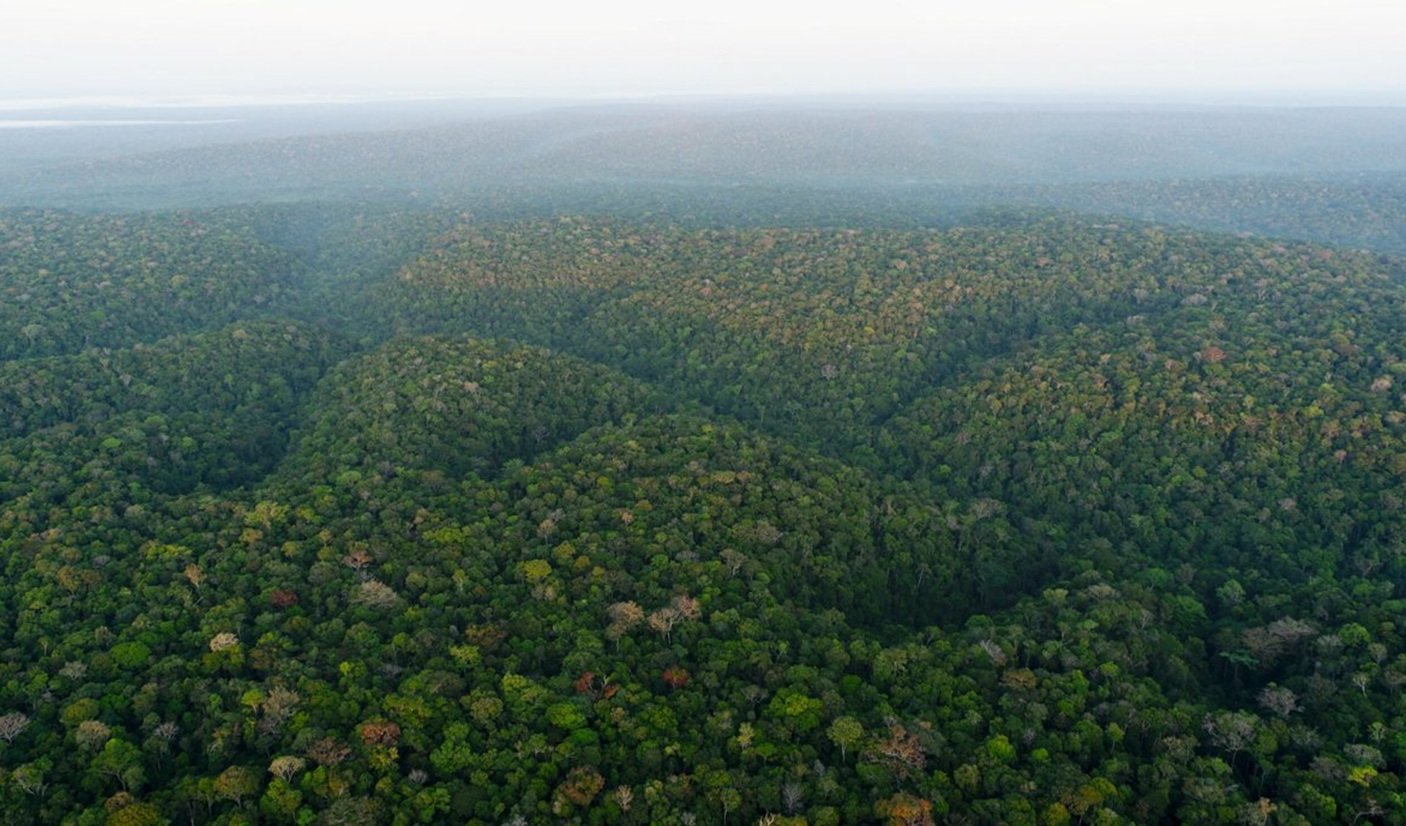
As the Amazon rainforest faces growing threats from deforestation, mining, biodiversity loss and climate change, scientists, policymakers and Indigenous leaders are exploring new approaches to protect one of the planet’s most important ecosystems.
Dr. Rosa Vásquez Espinoza, a Peruvian chemical biologist, National Geographic Explorer, author of The Spirit of the Rainforest and founder of Amazon Research Internacional, said solutions may come from combining modern scientific research with centuries-old Indigenous knowledge of the rainforest.
During a discussion on conservation and the future of the Amazon, Vásquez Espinoza described how many Indigenous communities view humans as part of a larger natural system in which forests, rivers, plants, animals and people are interconnected.
She said some Indigenous traditions hold that when people die, their spirits or ancestors can return to the natural world through elements such as trees, rivers, bees, or other animals.
“Each year, some Indigenous cultures believe that their ancestors, or they, when a person dies in the physical world, may go back into the natural world and come back as a tree, as a river, as a bee, as another kind of animal,” Vásquez Espinoza said.
She explained that these beliefs are connected to the idea that humans and nature share a relationship of mutual dependence.
“If I, as a human being, have the right to have access to a healthy forest and healthy waters, the animals around me and the plants around me do too, because if they are not healthy, I, as a human being, am not healthy,” she said.
According to Vásquez Espinoza, Indigenous communities have maintained relationships with ecosystems by practicing sustainable harvesting, protecting resources for future generations, and allowing forests to regenerate.
She said these perspectives differ from traditional scientific definitions of life, but she believes broader scientific discussions, including fields such as physics, raise questions about humanity’s relationship with nature.
“Everything’s made out of atoms, and they are all kind of in this constant state of flow,” she said. “We as human beings, as well as a rock or a river, are speaking about the same component.”
While she acknowledged the discussion can become philosophical, Vásquez Espinoza said the important issue is finding ways to respect different understandings of nature and apply those lessons to conservation efforts.
During the conversation, Vásquez Espinoza discussed the growing rights of nature movement, an environmental approach that seeks to provide ecosystems with legal representation and protections.
She said the movement is based on the idea that nature should have a similar level of representation in legal systems as humans and corporations.
“In the state of courts, we as human beings have inherent rights,” she said, explaining that human rights protections developed significantly following World War II. She added that corporations also have legal representation, while ecosystems often do not.
“The rights of nature movement starts with the idea to give nature that same level of representation that for-profit companies already have and that human beings have,” she said.
Vásquez Espinoza said the movement is not intended to replace existing environmental laws but instead to expand how societies approach conservation.
She argued that many environmental policies are designed to respond after damage has already occurred rather than prevent destruction through long-term protection and restoration.
“Nature doesn’t need us to be only reactive anymore,” she said. “If we are only continuing to be reactive, we are not going to make it.”
She said Indigenous perspectives have influenced the movement because many Indigenous cultures already recognize ecosystems as interconnected and worthy of protection.
Vásquez Espinoza also highlighted the importance of stingless bees, a group of pollinators that she said have existed since the time of dinosaurs.
She explained that stingless bees are native to tropical regions around the world, including parts of Latin America, Asia, Africa and Australia. Because they have evolved alongside flowering plants, she said they play an important role in maintaining plant diversity.
“They are actually amongst the most efficient pollinators of plants,” she said.
She said protecting pollinators is critical because they support food systems and contribute to the survival of plant species that provide food, medicine and other resources.
The Amazon rainforest, she said, affects people far beyond the region where it is located.
She pointed to the rainforest’s influence on global water cycles, weather patterns and ocean systems, saying changes in the Amazon can contribute to broader environmental impacts.
She also noted that many everyday products and medicines are connected to the rainforest, including coffee, cacao, acai and compounds derived from Amazonian plants.
Vásquez Espinoza referenced the Croton lechleri plant, commonly known as the Dragon’s Blood tree, as an example of Amazon biodiversity contributing to medical research. She said a compound from the plant became an ingredient in an approved pharmaceutical product.
She encouraged people to learn more about where their food and materials come from and consider how consumer choices affect ecosystems.
“Even if it’s to share a story or to read more about it, or to even ask ourselves where my food is coming from, or where this material that I’m about to purchase is coming from, it can make a huge difference,” she said.
During the discussion, Vásquez Espinoza also addressed archaeological discoveries made possible through lidar technology, which uses laser scanning to map landscapes beneath dense forest canopies.
She said researchers have uncovered evidence of large ancient civilizations in parts of the Brazilian and Bolivian Amazon, with additional research continuing in other regions.
The discoveries, she said, have changed perceptions about the history of the rainforest.
“I think what it does is it tells us that our management and cohabiting with the Amazon rainforest was a lot more intertwined and a lot more balanced than we ever gave it credit for,” she said.
Rather than viewing the Amazon as an untouched wilderness, Vásquez Espinoza said some researchers now describe it as a landscape shaped by generations of human interaction.
She said Indigenous communities historically cultivated, protected and managed species they relied on for food, medicine and other resources.
Vásquez Espinoza said scientific research is increasingly recognizing the value of knowledge developed by Indigenous communities.
She said traditional ecological knowledge is based on observation, testing and adaptation, which she compared to aspects of the scientific method.
“I feel like in a way modern science is catching up with ancestral knowledge,” she said.
However, she emphasized that Indigenous communities should be active leaders in research partnerships rather than simply sources of information.
“It’s key that we place those knowledge holders at the front of it, so we do it right,” she said.
She added that conservation efforts should include fairness, collaboration and respect for communities that have protected ecosystems for generations.
The discussion also touched on political challenges and economic pressures affecting the Amazon region, including poverty and dependence on natural resources.
Vásquez Espinoza acknowledged that many people living in the Amazon rely on the forest for their livelihoods and that balancing economic needs with conservation remains a major challenge.
She said political changes in countries throughout the region can create uncertainty for environmental protections, but she emphasized the importance of local organizations, scientists and communities continuing conservation efforts.
“There is so much resilience and resistance growing,” she said. “I do think there is hope.”
Vásquez Espinoza said protecting the Amazon will require cooperation among scientists, governments, Indigenous communities and individuals around the world.