


U.S. Crackdown on “Birth Tourism” Puts Border Women Under Greater Visa Scrutiny
Share your love
-Editorial
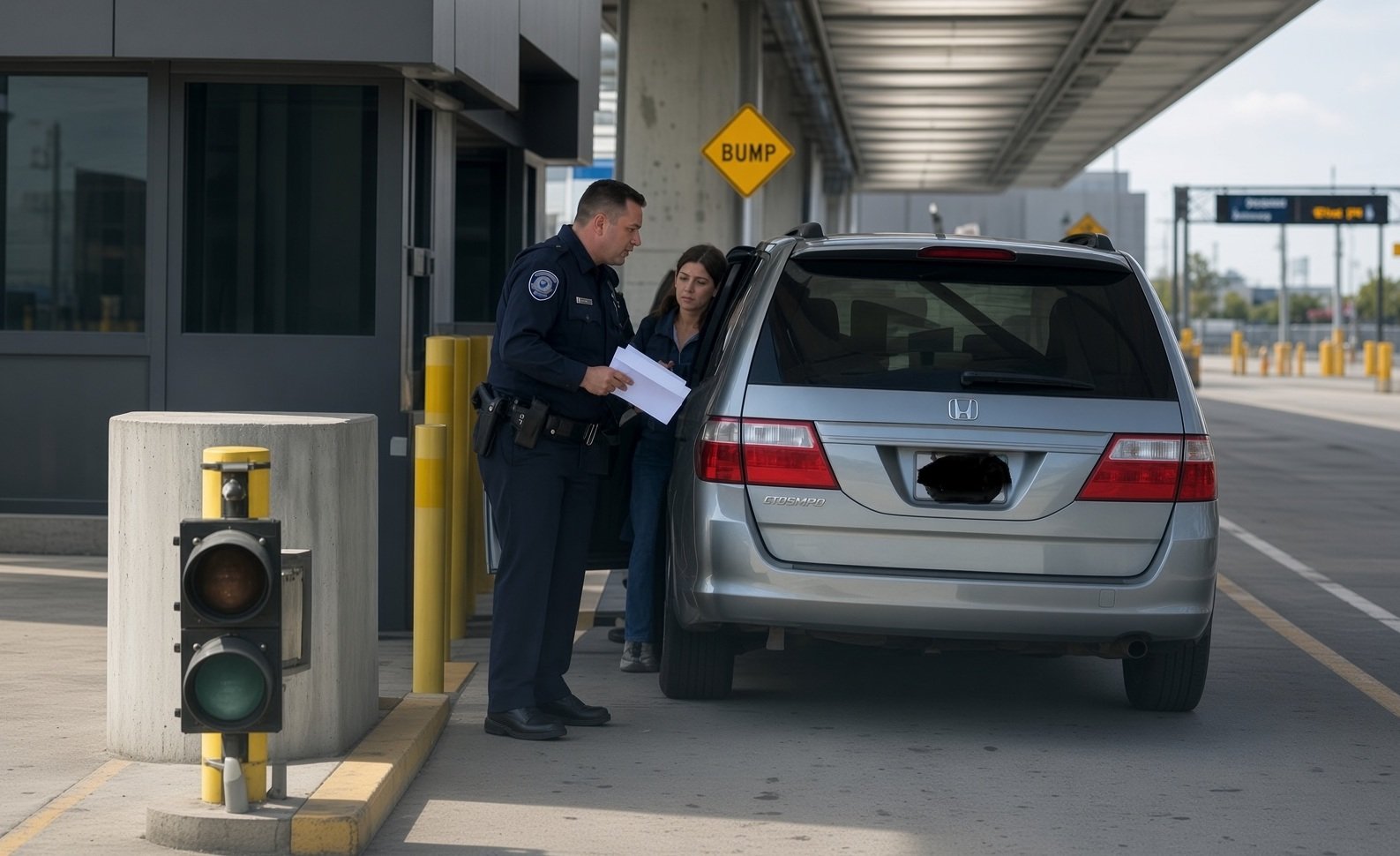
For generations, the U.S.-Mexico border has produced families whose lives, businesses, schools and medical care span two countries. Now, a new federal crackdown on what the U.S. government calls “birth tourism” is creating uncertainty for Mexican women who travel to the United States on visitor visas, particularly in border communities such as Tijuana and Mexicali.
The Trump administration has launched an aggressive effort to identify and revoke visas connected to birth tourism, while immigration attorneys and border advocates caution that having a child in the United States does not, by itself, automatically mean that a mother has committed immigration fraud or will lose her visa.
The distinction is increasingly important as federal authorities intensify scrutiny of pregnant travelers.
On August 6, 2026, President Donald Trump signed Executive Order 14419, titled “Ending Birth Tourism.” The order directs the Departments of State and Homeland Security to take measures against foreign nationals who enter or attempt to enter the United States on a nonimmigrant visa for the purpose of giving birth. It authorizes actions that may include denying entry, refusing or revoking visas, removing individuals from the country and permanently barring entry in qualifying cases.
The order also targets businesses, organizations and individuals alleged to facilitate birth-tourism arrangements.
The White House defines birth tourism as entering the United States on a nonimmigrant visa for the purpose of giving birth on U.S. soil, or helping another foreign national do so. The administration argues that organized operators have coached travelers to misrepresent their intentions to consular officers and border officials and have profited from arrangements promising U.S. citizenship for children.
The initiative quickly moved from policy to enforcement.
The State Department established a Birth Tourism Prevention Task Force, which it says reviews visa-holder travel activity, identifies suspected birth-tourism cases, investigates networks facilitating the practice and takes action to revoke visas.
By August 20, State Department officials said nearly 900 visas had been revoked since the task force was launched. The figure represents visas revoked worldwide, not specifically Mexican women or residents of Tijuana and Mexicali.
That distinction matters because no official federal breakdown has been released showing how many of those revocations involved Mexican nationals, border residents or women who had previously given birth in the United States.
A visa is not automatically canceled because a woman gave birth in the U.S.
The current policy does not establish a blanket rule under which every woman who has delivered a baby in the United States loses her visitor visa.
The State Department already states that medical treatment can be a legitimate purpose for a B-2 visitor visa. However, it specifically excludes travel whose primary purpose is giving birth in the United States to obtain citizenship for the child.
The department has also maintained since 2020 a rule creating a rebuttable presumption in certain visa applications involving applicants whom a consular officer has reason to believe will give birth during their stay. The applicant can overcome that presumption by demonstrating that giving birth to obtain citizenship is not the primary purpose of the trip.
That framework predates the 2026 executive order.
The American Immigration Lawyers Association, or AILA, has previously raised concerns about the breadth of the policy. In 2020, AILA Executive Director Benjamin Johnson argued that the government’s approach risked treating pregnant women differently and could place legitimate travelers under excessive scrutiny. AILA said the rule could have consequences beyond suspected birth tourism, including for women traveling for legitimate purposes.
More recently, AILA has documented the 2026 executive order and noted that its implementation raises questions about scope and how the Departments of State and Homeland Security will apply the new directives.
What about medical expenses and Medicaid?
One of the most important issues for border families is the ability to demonstrate that medical care in the United States can be paid for.
The State Department says applicants seeking medical treatment may be asked to provide documentation from a U.S. medical provider and evidence demonstrating how transportation, medical and living expenses will be paid.
However, it would be inaccurate to state that using Medicaid automatically cancels a tourist visa.
The State Department says abuse of U.S. public benefits by foreign visitors can result in visa revocation, future visa ineligibility and, in cases involving fraud, possible criminal consequences. The department’s public-charge guidance focuses on specified forms of government assistance rather than establishing a blanket rule that every medical benefit received by a visitor automatically voids a visa.
For that reason, travelers should not rely on rumors circulating on social media or border communities when determining whether a particular medical program is permissible.
Why the issue is particularly sensitive in Tijuana and Mexicali
The policy has generated concern in Baja California because cross-border family life does not always fit neatly into the categories used by federal immigration policy.
Victor Clark Alfaro, director of Tijuana’s Binational Center for Human Rights, told EFE that the new measures could result in greater scrutiny of pregnant women at U.S. consulates and ports of entry. He also emphasized that giving birth in the United States has historically been part of the social reality of many border families.
At the same time, a Tijuana immigration attorney interviewed this week said she had not documented a specific wave of visa cancellations tied solely to mothers having children in the United States. She emphasized that visa cancellations occur for numerous reasons and that pregnant women are not categorically prohibited from crossing.
That distinction is essential.
A woman who previously gave birth in the United States is not necessarily in the same legal position as someone who deliberately obtained a visa by concealing an intention to give birth in the country.
Under U.S. immigration law, willful misrepresentation of a material fact in obtaining a visa or admission can create serious immigration consequences, including permanent visa ineligibility in certain circumstances.
Birthright citizenship remains a separate question
The new crackdown also comes after a major Supreme Court decision.
On June 30, 2026, the Supreme Court ruled in Trump v. Barbara that children born in the United States to parents who are unlawfully or temporarily present are subject to U.S. jurisdiction and are citizens at birth under the Fourteenth Amendment’s Citizenship Clause.
That decision preserved birthright citizenship for the categories of children addressed by the ruling, even as the administration continues pursuing policies against what it describes as organized birth tourism.
The result is a complicated legal landscape: the citizenship of a child and the immigration status or visa compliance of the child’s parents are separate legal questions.
What travelers should do
For Mexican women who legitimately need to travel to the United States during pregnancy, immigration attorneys recommend preparing carefully rather than relying on assumptions.
Travelers should be prepared to demonstrate:
- The genuine purpose of the trip;
- Where they will stay and how long they intend to remain;
- Their financial ability to cover medical and living expenses;
- Medical-provider information and anticipated costs when traveling for treatment;
- Evidence of employment, residence and ties outside the United States;
- Documentation showing that information previously provided to U.S. immigration authorities was truthful.
Anyone whose visa has been revoked or who believes a fraud or misrepresentation finding has been made should obtain individualized advice from a licensed U.S. immigration attorney before attempting another application or crossing the border.
The federal government has made clear that the enforcement campaign is aimed at what it considers misuse of visitor visas and organized birth-tourism schemes. But along the border, where families routinely live across two countries, the challenge will be distinguishing intentional immigration fraud from the complex realities of binational life.
For thousands of families in Baja California, that distinction may determine whether a routine border crossing remains routine—or becomes a much more consequential encounter with U.S. immigration authorities.