


Dolores Huerta Speaks Out Amid Cesar Chavez Sexual Misconduct Allegations
Share your love
 -Editorial
A major controversy has emerged involving allegations that late labor leader Cesar Chavez engaged in inappropriate sexual behavior involving women and minors during his tenure as president of the United Farm Workers.
Civil rights leader Dolores Huerta ended decades of silence, stating that she experienced two sexual encounters with Chavez in the 1960s, one in which she said she was “manipulated and pressured” and another she described as being “forced, against my will.”
Huerta said both incidents resulted in pregnancies she kept secret, later arranging for the children to be raised by other families, and that she concealed the experiences for decades to protect the farmworker movement. She said she now identifies as a survivor of sexual violence and is speaking out as other women come forward with similar allegations, emphasizing that Chavez’s actions “do not reflect the values” of the movement and urging continued advocacy for farmworker and women’s rights.
The allegations were publicly acknowledged in statements released by organizations tied to Chavez’s legacy, marking a significant and sensitive moment for the farmworker movement he helped build. The United Farm Workers described the reports as “crushing” and “profoundly shocking,” reflecting the gravity of the claims and their potential impact on the organization and its supporters.
The Cesar Chavez Foundation said it had become aware of what it called “disturbing allegations” that Chavez engaged in inappropriate sexual behavior with women and minors. In its statement, the foundation said it was “deeply shocked and saddened” and emphasized its commitment to addressing the matter responsibly.
Foundation representatives said they are working with leaders in the broader farmworker movement to respond to the allegations, support individuals who may have been harmed, and ensure that their actions are guided by principles of justice and community empowerment. The organization also asked for patience as it gathers more information.
As part of its response, the foundation announced it is establishing a safe and confidential process for individuals to come forward and share their experiences of alleged historical harm. The process, according to the statement, will allow participants to contribute to potential efforts focused on repair and reconciliation, if they choose to do so.
The foundation added that it is investing time and resources into strengthening its internal workplace culture, with an emphasis on ensuring that its programs and operations remain safe and welcoming for all individuals. The organization said it will continue its ongoing work serving Latino and working-class communities across the Southwest during the review process.
The UFW Foundation, a separate but affiliated advocacy organization, also issued a statement condemning the alleged behavior. As a women-led organization, it said the allegations run counter to its mission of empowering and protecting vulnerable communities.
“These disturbing allegations involve inappropriate behavior by Cesar Chavez with young women and minors,” the UFW Foundation said in its statement, describing the claims as “shocking” and “indefensible.” The organization added that it is treating the matter with seriousness, given the populations it serves, many of whom are women and immigrants.
In response to the allegations, the UFW Foundation announced it has canceled all Cesar Chavez Day activities scheduled for March, citing the need to focus on supporting survivors and addressing the situation. The decision marks a notable departure from annual commemorations that typically honor Chavez’s legacy and contributions to labor rights.
The organization emphasized that the healing and safety of survivors is its highest priority and noted that it has worked for nearly two decades to provide advocacy, organizing, and direct services to farmworkers and immigrant communities in multiple states.
As part of its public outreach, the UFW Foundation encouraged individuals affected by sexual assault or domestic violence to seek help through national support services. These include confidential hotlines that assist in English, Spanish and other languages, as well as online chat resources and directories of local service providers.
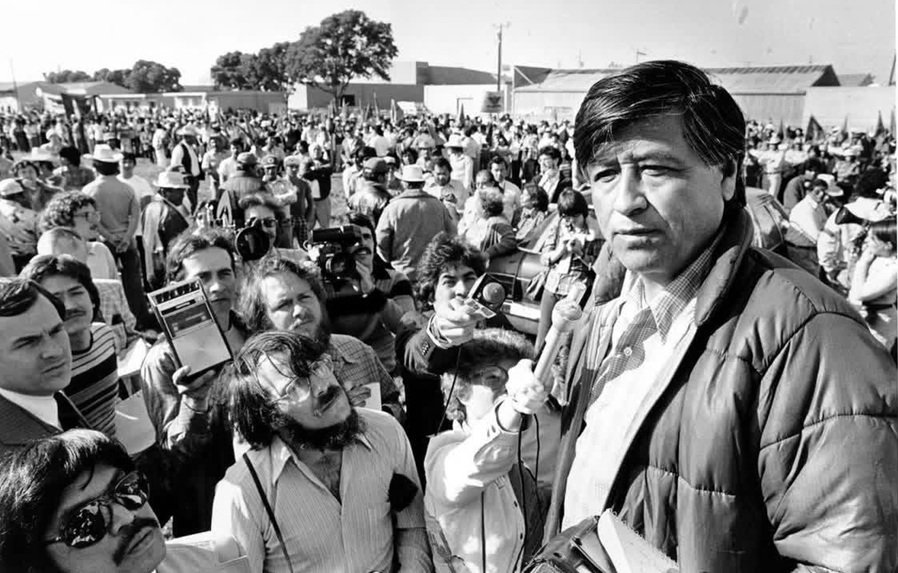
Chavez, who was born in Yuma, Arizona, to a Mexican American family, began his career as a farm laborer before serving in the U.S. Navy. He later became involved in community organizing through the Community Service Organization, where he helped agricultural workers register to vote and eventually rose to become the group’s national director.
In 1962, Chavez left that organization to co-found the National Farm Workers Association in Delano, California. The group later merged with the Agricultural Workers Organizing Committee, led by labor leader Larry Itliong, to form the United Farm Workers in 1967.
Chavez gained national prominence during the Delano grape strike of 1965 to 1970, a labor action that drew widespread support and led to improvements in wages and working conditions for farmworkers. His approach was influenced by the philosophy of nonviolent resistance championed by Mahatma Gandhi, incorporating tactics such as strikes, boycotts, marches and public fasts.
His activism was also shaped by his Catholic faith, often incorporating religious symbolism into demonstrations and public events. Chavez became a prominent figure within organized labor and civil rights movements, earning recognition from supporters while also drawing scrutiny from government agencies, including monitoring by the Federal Bureau of Investigation.
Despite his influence, Chavez’s leadership was not without controversy during his lifetime. Critics raised concerns about his centralized control of the union, internal purges of dissenting members, and strategic decisions that led to divisions within the labor movement. Some farm owners and political opponents labeled him a radical, while others questioned aspects of the union’s operations in later years.
During the 1970s and 1980s, Chavez sought to expand the reach of the United Farm Workers beyond California, while also engaging in campaigns related to immigration and pesticide use. His positions on undocumented workers created tensions with some allies and contributed to internal conflicts within the organization.
Chávez died in 1993. In the years following his death, he became an enduring symbol of farmworker advocacy and Latino civil rights. His legacy has been commemorated through public holidays, schools, streets, and community institutions bearing his name. In 1994, he was posthumously awarded the Presidential Medal of Freedom.