



Gun Violence Declines but US Remains Global Outlier
Share your love
 -Editorial
Mass shootings and gun violence have become a grim and recurring feature of life in the United States. Even as the number of mass shootings has declined to its lowest levels in 2 decades, the US still has the highest number of gun-related deaths of its peer nations. Yet despite national outrage that follows every mass shooting, policy responses remain uneven and polarized, constrained by constitutional debates and American gun culture.
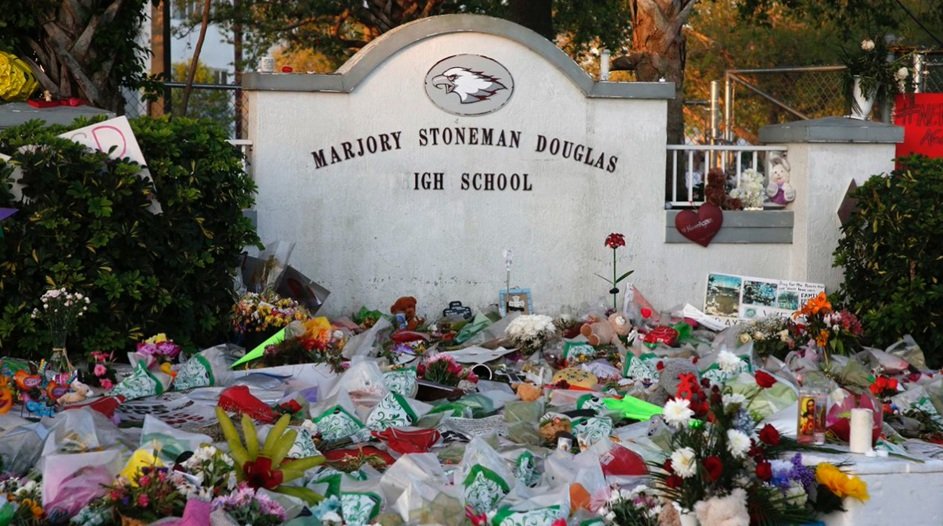
Sarah Lerner, a high school English teacher and co-founder of Teachers Unify to End Gun Violence, recounted her experiences during the 2018 mass shooting at Marjory Stoneman Douglas High School and urged greater support for educators in the fight against gun violence.
Lerner, who has taught since 2002 and joined the Parkland, Florida, school in 2014, described the chaos of February 14, 2018. “I was in my class with my seniors. We had a fire drill, a planned fire drill that day. At 2:20, about 20 minutes before school was over, the fire alarm went off… I heard what sounded like firecrackers, which was the sound of the gunshots,” she said.
Seventeen people were killed and 17 others were injured that day. Lerner sheltered 15 students in her classroom during a lockdown that lasted more than three hours. She lost two students she had taught since their freshman year.
Following the shooting, Lerner helped compile the 2019 anthology Parkland Speaks, featuring artwork, poetry, and first-hand accounts from survivors. “It was really important for me to do that because it was our story to tell,” she said.
In 2021, Lerner co-founded Teachers Unify to End Gun Violence with other educators, seeking to amplify teacher voices in policy discussions. “School shootings are such a small piece of gun violence, but they get the most media coverage,” she said. “Our goal is to be a resource and a voice for all teachers, because we are the ones in classrooms every single day, listening to the stories, wiping the tears, giving the hugs.”
Lerner emphasized the ongoing trauma experienced by teachers and students. “It took about six months for me to really process what happened. We need mental health resources and early interventions for survivors,” she said.
Dr. Ragy Girgis, a psychiatrist and professor of clinical psychiatry at Columbia University, said evidence shows that mental illness is not a primary factor in mass shootings, emphasizing the role of firearm access and policy instead.
Girgis, director of the Center for Prevention and Evaluation at Columbia, has spent over a decade studying violence and schizophrenia. His team compiled a database of roughly 2,300 mass murders worldwide since 1900, focusing on “personal cause” events, including school shootings, while excluding gang, political, or war-related violence.
“The vast majority of mass shootings are not related to mental illness,” Girgis said. “Only about 5% are directly attributable to psychotic disorders. The prevalence of mental illness among mass shooters is roughly the same as in the general population.”
Girgis highlighted a consistent psychological profile among shooters: fascination with firearms, severe nihilism, and narcissism linked to low self-esteem. Suicide plays a major role, with over half of mass shooters taking their own lives during the attacks.
His research underscores the importance of firearm policy. “Weaker state firearm laws are very strongly associated with both the number of mass shootings per capita and the number of victims,” Girgis said. “The vast majority of weapons used are legally acquired. Strengthening and enforcing firearm laws is critical.”
Girgis also addressed misconceptions about psychiatric medications, noting that antidepressants and other therapies do not contribute to mass shootings and can prevent suicide.
Gun violence in the United States has declined sharply in recent years, according to Dr. Daniel Webster, Bloomberg Professor of American Health at Johns Hopkins University, who cautioned that while rates remain high compared with other nations, recent trends offer reasons for cautious optimism.
“If you only read headlines, you’d think gun violence is skyrocketing,” Webster said. “The data tell a different story. Homicides, including those committed with firearms, have dropped significantly in many U.S. cities.”
Webster noted that from the peak in 2021–2022, homicide rates in cities like Detroit fell by 76%, while Baltimore, Philadelphia, and New Orleans saw declines of around 60%. “Nearly all places in the United States have enjoyed much lower rates of homicides in recent years,” he said.
The drop follows a surge during the early COVID-19 pandemic, fueled by social unrest, increased firearm purchases, and strained public systems. Webster highlighted the impact of federal funding, community violence intervention programs, and regulatory efforts targeting “ghost guns.”
Gun violence behaves like a social contagion. Every effective intervention not only stops a shooting today but also prevents future incidents. Currently, there is a promising downward trend, but sustaining this progress will require continued attention and effort.