



Joint U.S.-Israeli strikes hit sites across Iran; Tehran retaliates with regional missile attacks
Share your love
 -Editorial
Israel and the United States launched coordinated military strikes against targets across Iran early Saturday, officials said, in a sweeping escalation that prompted Iranian missile attacks across the Middle East and raised fears of a broader regional conflict.
President Donald Trump said American forces participated alongside Israel, describing the objective as degrading Iran’s military and missile capabilities and preventing it from obtaining nuclear weapons. He also urged members of Iran’s Islamic Revolutionary Guard Corps to surrender, warning of severe consequences if they did not.
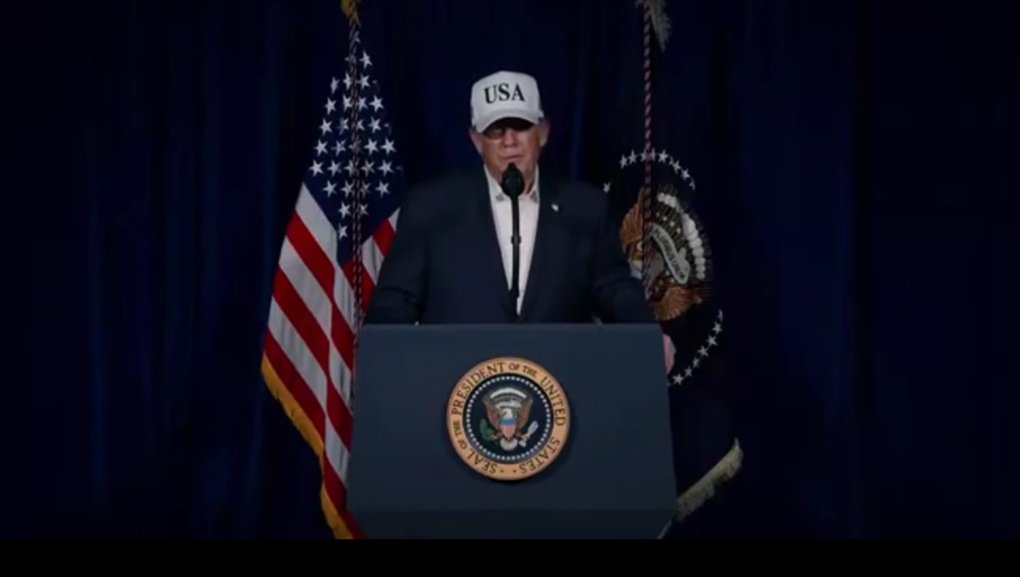
In a televised address, Trump said the operation aimed to stop Iran from developing nuclear weapons and to weaken its military capacity. He acknowledged the possibility of casualties among U.S. forces and urged Iranian citizens to oppose their government.
Rep. Raul Ruiz (D-Coachella) said President Donald Trump “has lied to the American people, broken the law and risked American lives for a personal vendetta,” adding that Trump had promised to avoid new wars but initiated military action without congressional approval. Ruiz said a prior international agreement had constrained Iran’s nuclear ambitions and argued that Congress “must act immediately to stop Trump from risking American lives.”
Israeli officials said the operation targeted military infrastructure and leadership sites in several Iranian cities, including Tehran, Isfahan, Qom, Karaj, and Kermanshah. Explosions were reported across those locations as Israeli Defense Minister Israel Katz confirmed an attack by the Israel Defense Forces.
Iranian officials did not immediately provide a comprehensive assessment of damage or casualties. Iranian and international media reported that the compound of Supreme Leader Ali Khamenei was heavily damaged. Reports also said senior security official Ali Shamkhani was killed. Independent verification of those claims was not immediately available.
Israeli military officials said hundreds of aircraft struck air defense systems, missile launchers, and command facilities in western and central Iran. The Israeli government declared a nationwide state of emergency and ordered citizens to remain near protected areas. Hospitals moved critical operations underground, and public gatherings were suspended.
Within hours, Iran launched dozens of ballistic missiles targeting Israeli territory and U.S. military installations across the Persian Gulf region, according to regional governments and military statements.
Air-raid sirens sounded in several Gulf states as missiles were reported near U.S. bases in Bahrain, Qatar, Kuwait, and the United Arab Emirates. Saudi Arabia said it intercepted missiles aimed at Riyadh and the country’s Eastern Province. Jordan said it shot down projectiles over its territory and reported damage from falling debris.
Missile impacts were also reported in northern Israel, where authorities said at least one building was struck. Regional officials reported injuries and property damage in multiple locations, though casualty figures varied and could not be independently confirmed.
Iran-backed Houthi forces in Yemen said they would resume attacks in the Red Sea, raising concerns about shipping routes and global energy supplies.
Israeli Prime Minister Benjamin Netanyahu said the operation was intended to eliminate what he described as an existential threat posed by Iran’s leadership and military capabilities. U.S. officials characterized the strikes as part of a broader effort to counter Iran’s missile program and regional activities.
Iranian authorities condemned the strikes and vowed retaliation. Government communications were limited following widespread disruptions to telecommunications and internet connectivity.
The strikes follow years of escalating confrontation among Israel, the United States, and Iran. Relations deteriorated sharply after Washington withdrew from the 2015 nuclear agreement in 2018 and imposed sweeping economic sanctions on Tehran.
Regional hostilities intensified following the 2023 Gaza war and subsequent exchanges of strikes between Israel and Iran in 2024 and 2025. Earlier U.S. airstrikes targeted Iranian nuclear-related facilities, according to American officials.
Indirect nuclear negotiations between U.S. and Iranian representatives had taken place earlier this month in Oman. Diplomatic officials had recently described progress toward a potential agreement that would include limits on uranium enrichment and expanded international inspections. The military action occurred one day after Omani officials publicly reported a diplomatic “breakthrough.”
U.S. officials said congressional leadership had been notified before the operation. The White House said Trump monitored developments with his national security team.
Regional governments heightened security measures, closed airspace, and warned residents to shelter in place when sirens sounded. International airlines suspended flights across parts of the Middle East.
Civilian air traffic across Iran and neighboring states was sharply reduced as countries including Israel, Iraq, Bahrain, Kuwait, Qatar, Syria, and the United Arab Emirates closed airspace. Airlines diverted or canceled flights, and maritime security officials reported threats to commercial shipping near the Strait of Hormuz.
Energy markets and global shipping routes faced uncertainty as the situation evolved.
Additional Israeli strikes were reported later Saturday, targeting Iranian air defenses and missile infrastructure. Iranian authorities warned of further retaliation.