



Art Market Rebounds to $59.6B in 2025
Share your love
 -Editorial
The global art market returned to growth in 2025, reaching an estimated $59.6 billion in total sales, up 4% from the previous year, according to the 10th edition of the Art Basel and UBS Global Art Market Report. Authored by Dr. Clare McAndrew of Arts Economics, the report provides a data-driven overview of the dealer, auction, and art fair sectors, placing market performance within a broader economic and wealth context.
Dealer sales rose 2% to $34.8 billion, while public auction sales increased 9% to $20.7 billion. Private sales declined 5% to just under $4.2 billion. Overall transaction volume reached an estimated 41.5 million, up 2% from 2024, marking a modest recovery after two consecutive years of decline.
The United States remained the largest art market, accounting for 44% of global sales at $26 billion, a 5% increase in high-end auction sales. The U.K. followed with $10.5 billion, up 2%, while China posted stable growth of just over 1% to $8.5 billion amid real estate and economic concerns. France saw a 9% increase to $4.5 billion, surpassing its 2019 level. Other European markets were mixed, with Switzerland and Austria up 13% each, Spain rising 6%, Germany down 10%, and Italy declining 2%. In Asia, South Korea recorded a 6% increase, while Japan fell 1%.
High-end auctions were a major driver of growth. In the U.S., sales of lots valued over $10 million increased nearly 40%, and major collections such as the Leonard A. Lauder and Cindy and Jay Pritzker collections contributed to strong results in the second half of the year. Postwar art remained the largest fine art auction segment with a 31% share by value, followed by Modern art at 24%, Impressionist and Post-Impressionist works at 19%, Contemporary art at 14%, and the wider Old Masters market at 11%. The Impressionist and Post-Impressionist segment experienced the strongest growth, up 47%, while Modern art rebounded 9% and Postwar art declined slightly.
Dealer performance varied across segments. Smaller dealers with annual turnover under $500,000 saw strong double-digit growth, while mid-sized dealers ($1 million–$10 million) experienced a slight decline. Larger dealers above $10 million returned to 3% growth after two years of contraction. Female artist representation strengthened in 2025, reaching parity in primary market galleries and 45% across all dealers. Sales of works by female artists accounted for 37% of the total value, up from 28% in 2018, though disparities persisted at higher-revenue galleries.
Shifts in buyer patterns reflected broader market trends. Increased costs and administrative burdens on international transactions led many dealers to rely more heavily on local collectors. Local sales rose to 71% for smaller dealers, while larger galleries also saw an increase to 29% of buyers. The average number of unique buyers per dealer fell to 57, the lowest since 2021, though nearly half of all buyers in 2025 were new to dealers’ businesses, reflecting continued efforts to expand client bases.
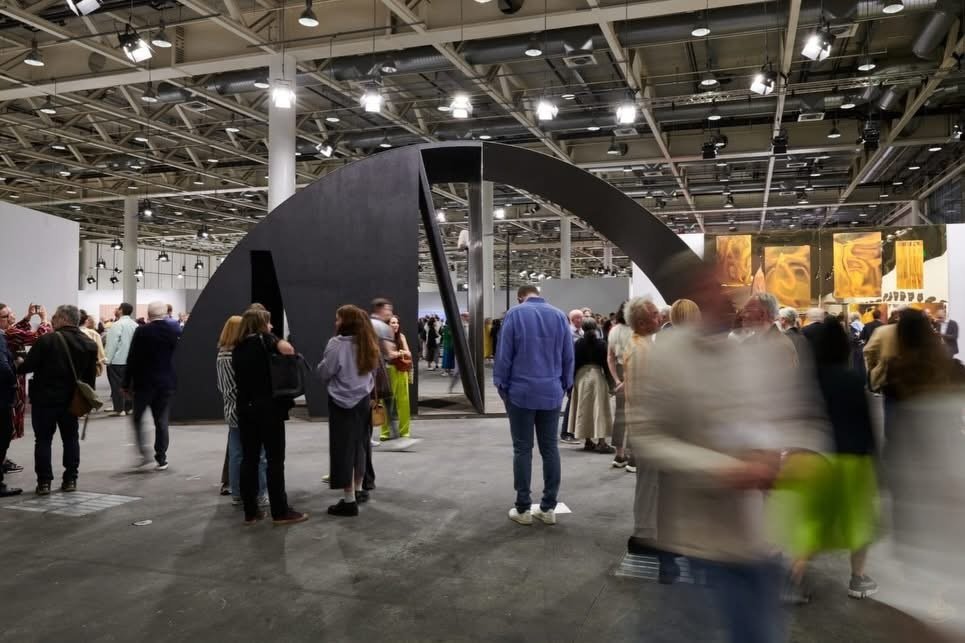
Art fairs accounted for 35% of dealer turnover, the highest share since 2022, with growth in both local and overseas events. Mid-size dealers recorded the largest gains in fair-related sales, increasing their share from 29% in 2024 to 36% in 2025. Large dealers above $10 million saw a slight decline in overseas fair sales, offset by a small increase in local event sales.
Online-only sales fell to $9.2 billion, the lowest level since 2019, as high-end buyers returned to in-person auctions and gallery sales. Online sales remained concentrated in mid- and lower-price segments, and while they continued to be a key channel for new buyers, their overall share of the market dropped 3% year-on-year to 15%.
Despite lingering challenges from inflation, tariffs, and geopolitical uncertainty, the outlook for 2026 is cautiously optimistic. Forty-three percent of dealers expected higher sales in the year ahead, up from 33% in 2025, while 38% anticipated stability and 19% forecast a decline. Nearly half of mid-tier auction houses expected improved results.
Dr. McAndrew highlighted the stability of cross-border trade in 2025 but noted potential risks from protectionist policies, trade fragmentation, and broader geopolitical uncertainty. Paul Donovan, chief economist at UBS Global Wealth Management, emphasized the structural influence of the “Great Wealth Transfer,” with more than $83 trillion set to pass between generations in the coming decades. As wealth shifts toward younger and female collectors, motivations for collecting, philanthropic priorities, and engagement with the art market are evolving.
Noah Horowitz, CEO of Art Basel, described 2025 as a “strategic inflection point” for the market, citing improvements in dealer programs, client engagement, and art fair sales, even amid persistent cost pressures. He said sustained growth will depend on bringing exceptional works to market, deepening client relationships, and broadening participation across the global ecosystem.
The report underscores a global art market that is gradually recovering and recalibrating, balancing optimism with caution as it navigates economic, geopolitical, and structural shifts.